Autonomous drones that can see, navigate, and act in complex, messy environments depend on one thing: high-quality, labeled training data. In drone vision - whether for surveillance, object detection, terrain mapping, or BVLOS operations - a model is only as reliable as its dataset.
But collecting real aerial imagery is hard:
- High operational costs (flights, equipment, pilots)
- Slow manual labeling, especially for complex labels
- Limited edge case representation
- Domain bias due to specific geographies, lighting, and weather
- Regulatory hurdles around flight zones and privacy
To get past these barriers, AI Verse built a procedural engine that generates realistic, precisely labeled images of many real-world environments, including those drones fly in.
Why Do Synthetic Images Matter for Drones?
Here is how they help at each stage of model training:
1. Scalable, Cost-Efficient Data Generation
Collecting aerial data usually means permits, flight planning, piloting, sensor calibration, and endless post-processing. The result is slow progress and small datasets that only cover narrow conditions.
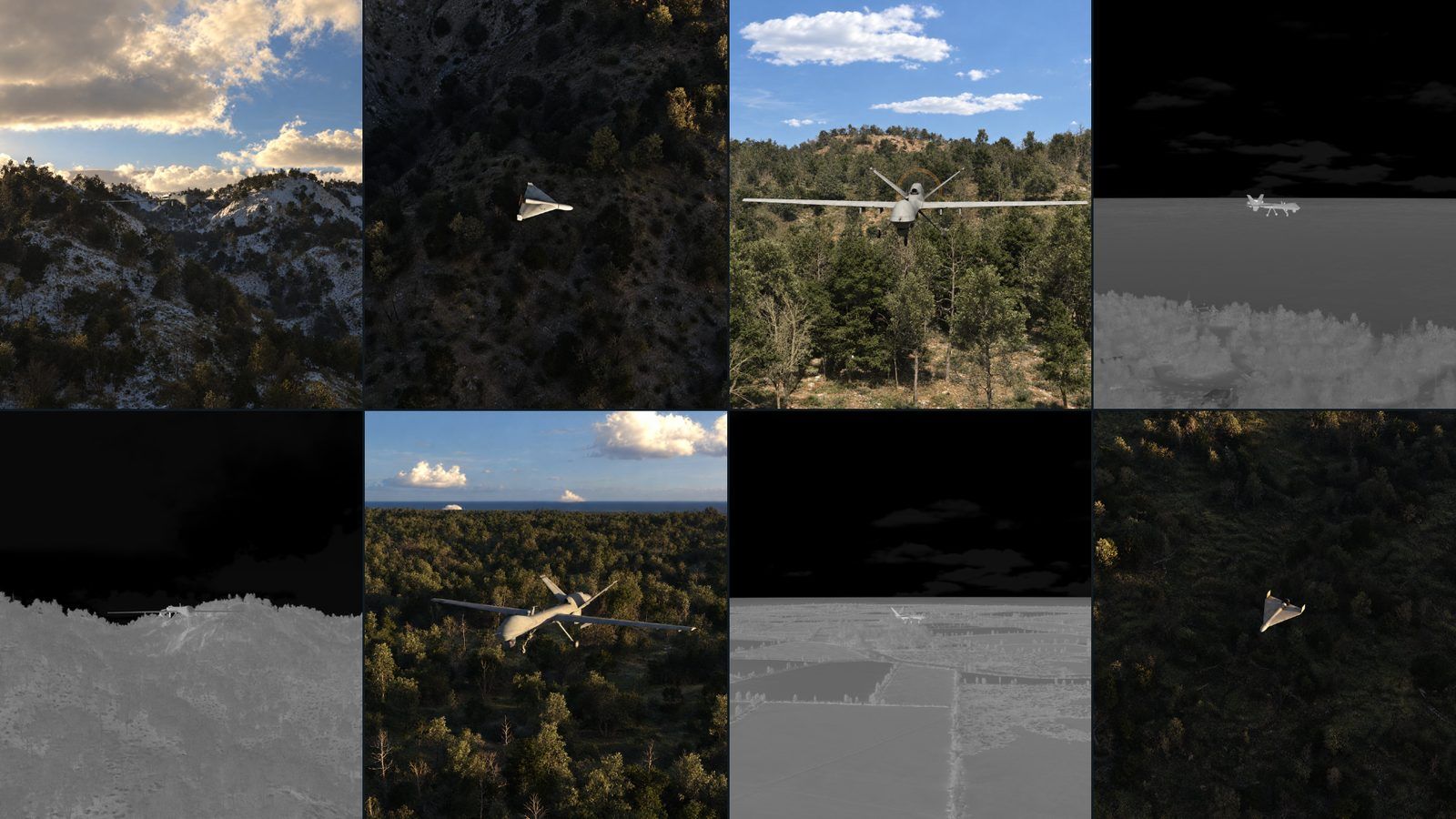
Procedural generation, by contrast, quickly produces thousands of labeled images with full control over the environment. For example, you can simulate drone views of a border under five lighting conditions and three weather types in a single batch in hours instead of months.
2. Pixel-Perfect Annotations
Labeling drone images by hand is especially hard for:
- 3D bounding boxes
- Depth estimation
- Instance-level segmentation
- Semantic scene understanding
AI Verse’s procedural engine takes labels straight from the synthetic scene, so they are exact and noise-free. That removes the model errors that bad labels cause.
3. Controlled Domain Diversity and Bias Mitigation
A key benefit of the AI Verse procedural engine is that you decide exactly what goes into each dataset, which you can’t do with real-world data.
You can specify:
- Environment type: urban, coastal, desert, forest, mountainous
- Lighting scenario: dawn, dusk, noon, night
- Sensor attributes: camera tilt, resolution, distortion, motion blur
- Assets: type, quantity, colors, etc.
The resulting datasets carry over well to the real world and can train models reliable enough to deploy.
4. No Compliance Barriers
Synthetic data avoids the legal problems of privacy rules and filming private property. In defence, public safety, and infrastructure surveillance, teams can build prototype models without waiting on legal approval.
This is especially relevant for sensitive applications like:
- Border surveillance
- Threat detection
- Emergency response over populated areas
5. Edge Case Simulation at Scale
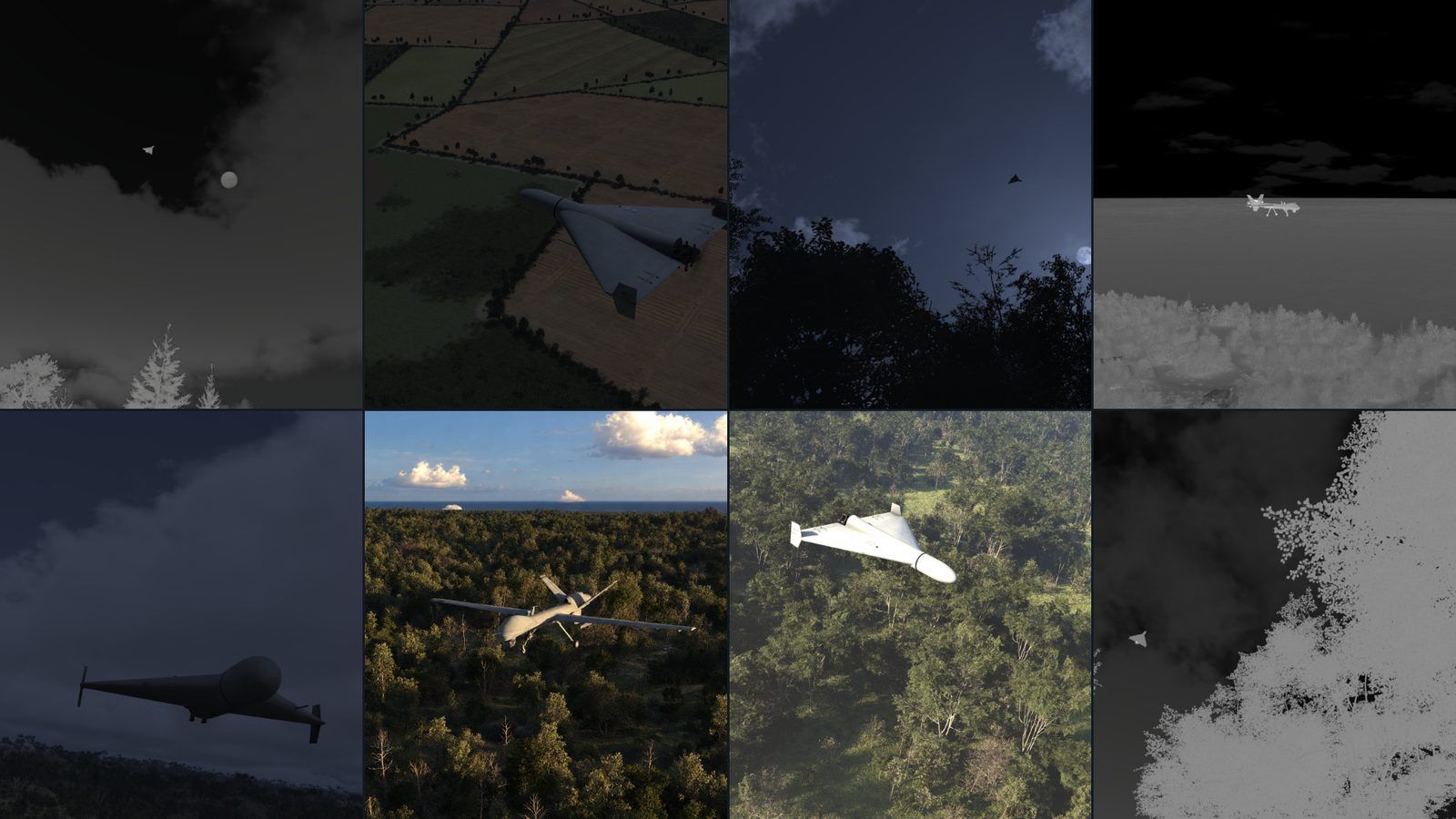
Rare but critical scenes - hidden objects, smoke, tracking in low light - are nearly impossible to capture in real life. With a procedural engine, you can generate as many of these edge cases as you need and test your models where it matters most.
From Months to Days: Synthetic Data Accelerates Model Development
Teams using the AI Verse procedural engine report:
- Shorter development time: work that took months now takes days
- Improved mAP scores across detection tasks due to better label quality
- Faster launches, because they prototype with synthetic data before field tests
Synthetic datasets also let you test a model under every environmental condition, one at a time, so your evaluation is systematic and reliable.
Applications Across Drone Vision Use Cases
AI Verse delivers custom, realistic datasets for drone models such as:
- Aerial reconnaissance object detectors
- Counter-UAS detection systems
- SAR (Search and Rescue) models
- Autonomous BVLOS navigation systems
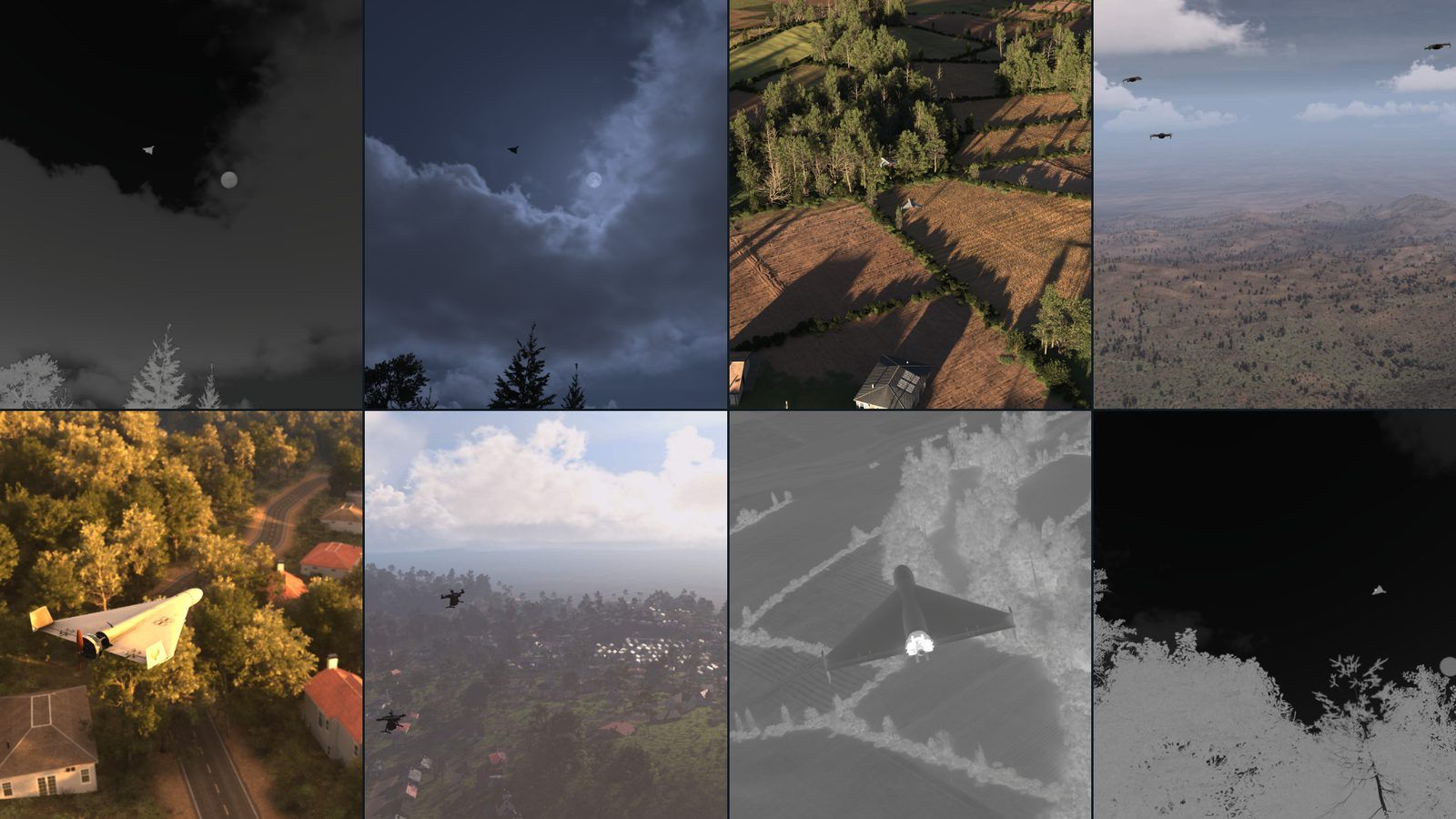
Better drones need more than better hardware or smarter edge AI. They need data that reflects how complex the sky really is. With AI Verse’s synthetic datasets, you don’t wait for the perfect shot - you generate it, label it, and train your models on it, at scale and on demand.