One procedural world, two engines.
GAIA generates what your vision system needs to see. SAPHIRA trains what it does. Both run in the same procedural world, with the same scenes, sensor models and parameters.
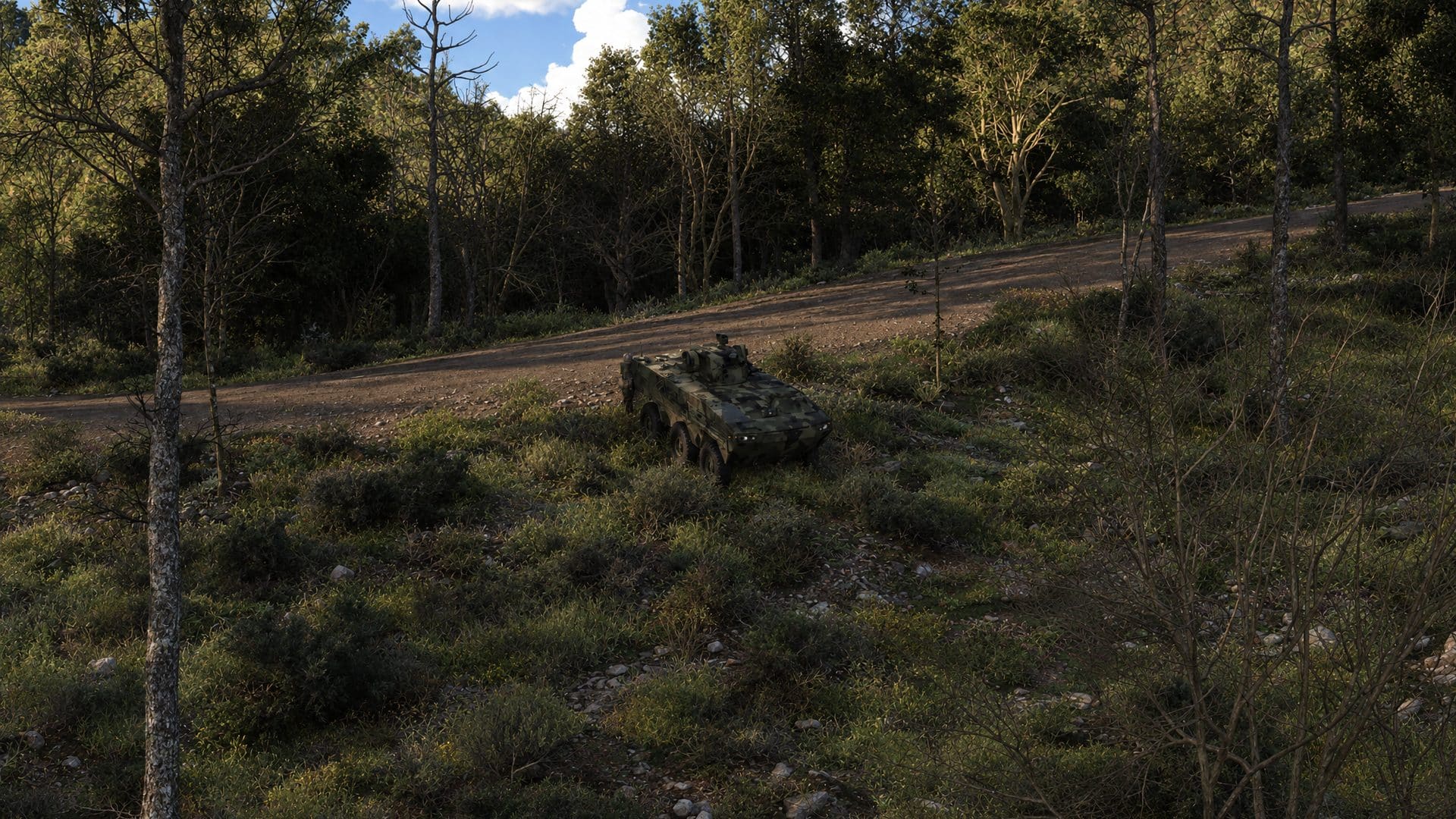
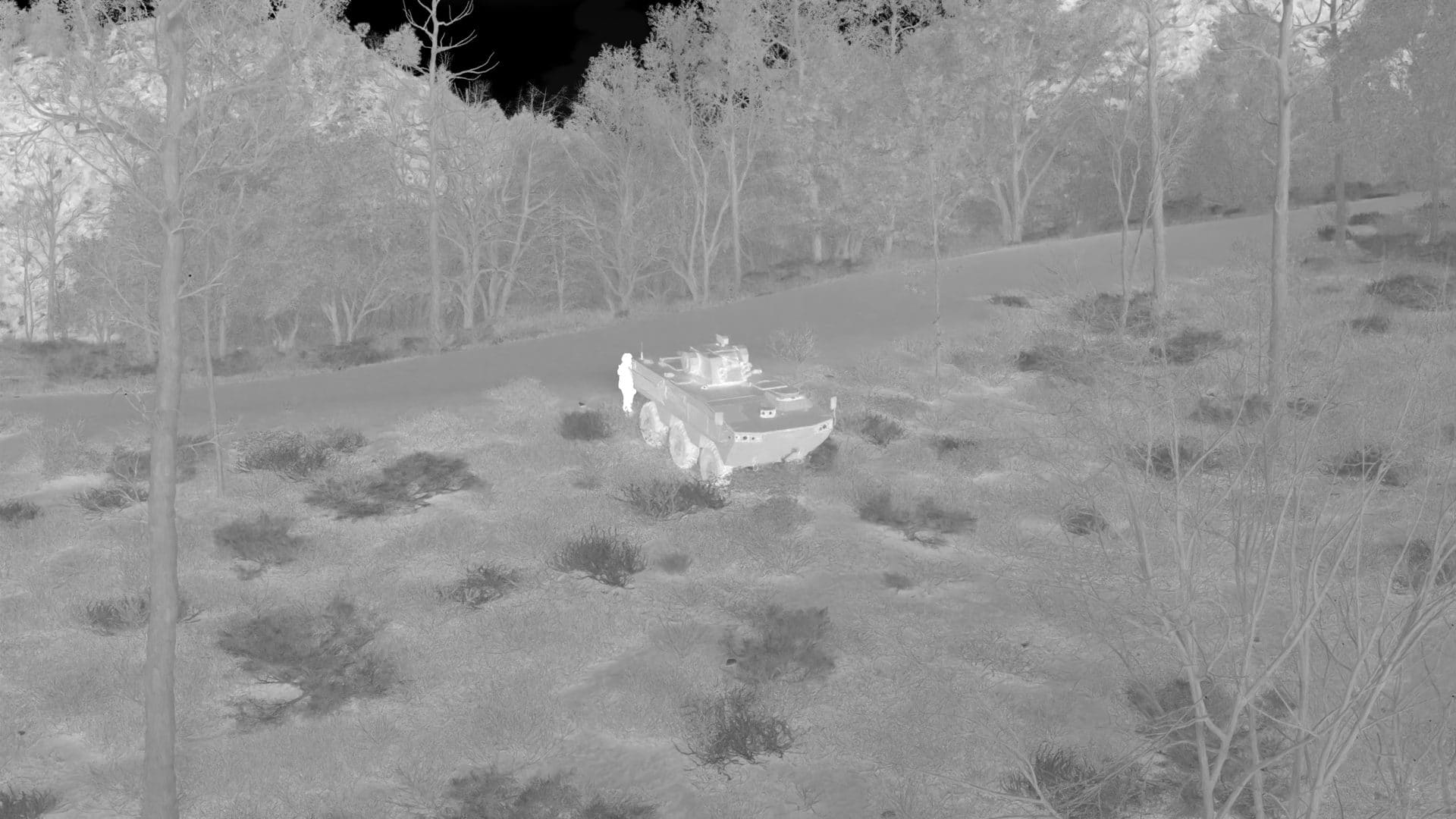 EO · DAYLWIR · DAY
How the platform fits together
Procedural world
- ScenesParametric, GIS-grounded
- Materials260+ with IR properties
- Sensor modelsOptics, array, link
- Ground truthMade with the pixels
GAIA
Live nowPerception data and dataset completion, EO and LWIR
SAPHIRA
December 2026Closed-loop simulation that trains guidance inside the scene
What a procedural world is
A procedural world is built from rules and parameters, not from footage. Terrain, buildings, vehicles, weather, light and thermal state are all values you set. Change one and the scene rebuilds itself, with ground truth generated alongside every pixel.
Nothing is filmed or scraped, so you can reach conditions no collection campaign will record, such as thermal crossover at dawn, sea state 5 or a drone forty pixels wide against a tree line.
The products
GAIA
Procedural data engine for perception training. EO and LWIR imagery are generated from one scene, with eight ground-truth labels on every frame and no annotation pass. GAIA also completes the datasets you already have with rare classes, missing conditions and sensor configurations you never captured.
See GAIA →SAPHIRA
Closed-loop simulation. Your guidance code runs inside the scene. It receives the sensor feed, sends its commands, and the scene responds. Closed beta available from December 2026, general availability in Q1 2027.
See SAPHIRA →Custom Asset Importer
A paid option of the platform. Import your own 3D assets, configure their variations and load them into GAIA and SAPHIRA as encrypted .cafe files, prepared in your environment.
See the importer →Why all products share one procedural world
One scene, two problems
The frames that train the detector and the world that trains the guidance are the same asset. You build a scenario once and use it for both.
One sensor model
Noise, blur, banding and thermal behaviour are defined once and applied everywhere. The loop replays exactly what the detector learned from.
One set of parameters
Range, light, sea state, thermal crossover. Defined once, they drive the images GAIA renders and the scenes SAPHIRA runs.
How you run it
Run it as sovereign SaaS, hosted on Scaleway in France and managed by AI Verse, or install it on your own infrastructure, where nothing leaves your network. Build scenarios yourself, or have our engineers scope and run them for you.
Running today, and what comes next
| Capability | Availability | Product |
|---|---|---|
| Perception training data, EO and LWIR | Running today | GAIA |
| Dataset completion with rare classes and conditions | Running today | GAIA |
| Air, sea and land scenes in EO and LWIR | Running today | GAIA |
| Guidance training in closed loop, closed beta | December 2026 | SAPHIRA |
| Guidance training in closed loop, general availability | Q1 2027 | SAPHIRA |
| Your own 3D assets in the platform | Q1 2027 | Custom Asset Importer |
Asked before every evaluation.
What is the difference between GAIA and SAPHIRA?
+
They are two engines on one procedural world. GAIA, live today, generates EO and LWIR training images with ground truth. SAPHIRA runs your guidance code inside the same scenes in closed loop, with a closed beta in December 2026 and general availability in Q1 2027.
They share the same scenes, sensor models and parameters, so nothing is rebuilt between them.
Can we run AI Verse on our own infrastructure?
+
Yes. AI Verse runs either on-premise, installed inside your perimeter where no dataset, model or scenario leaves your network, or as sovereign SaaS on Scaleway infrastructure in France, managed by AI Verse.
Both deployments run the same engine and produce the same outputs.
How long does it take to get a first dataset?
+
About two weeks after the scoping call, on your target class and modelled on your sensor.
Start with your first dataset.
Tell us what your system has to see, or what it has to do. We scope it on the call.