Generate the infrared imagery you cannot collect.
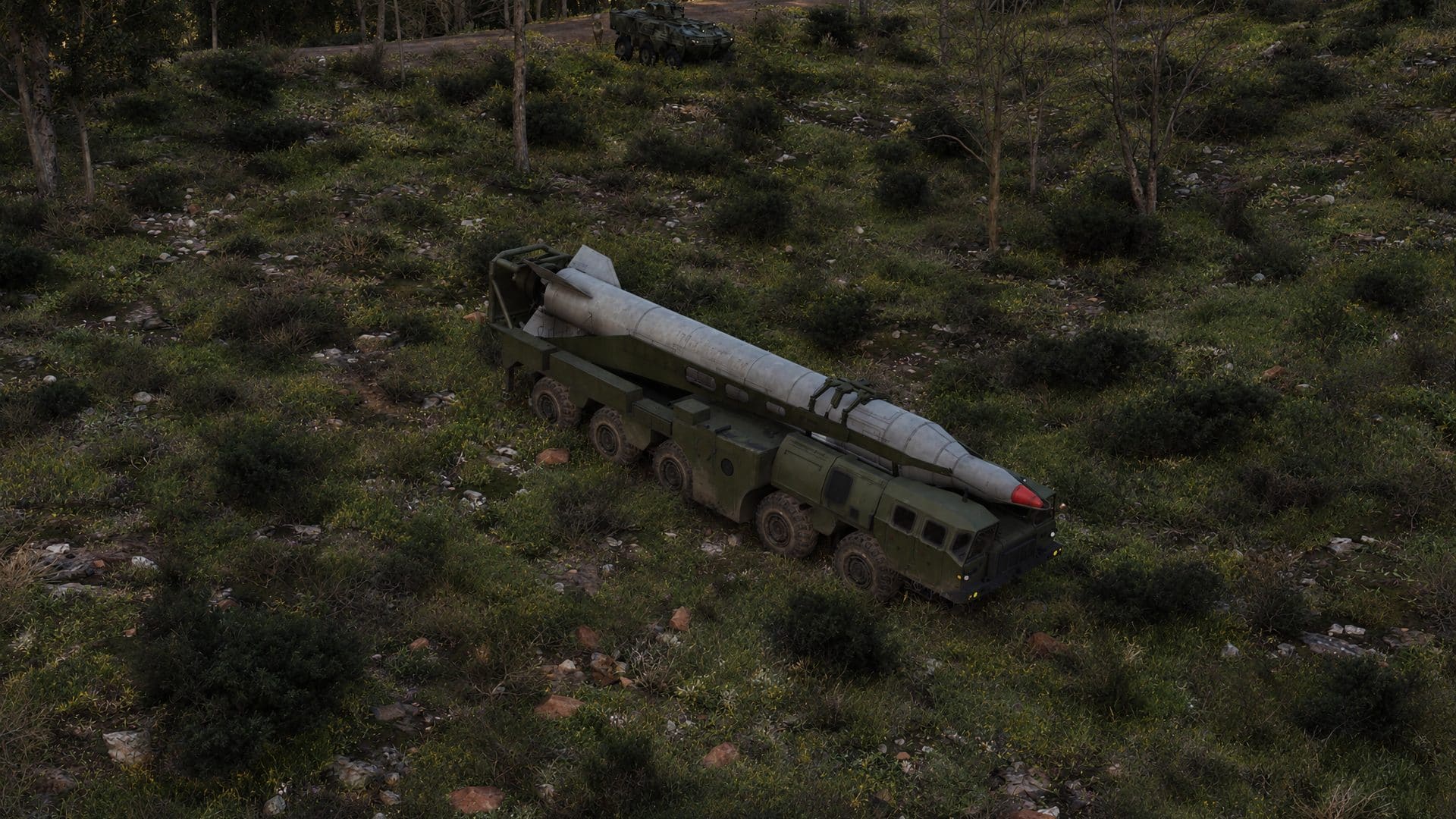
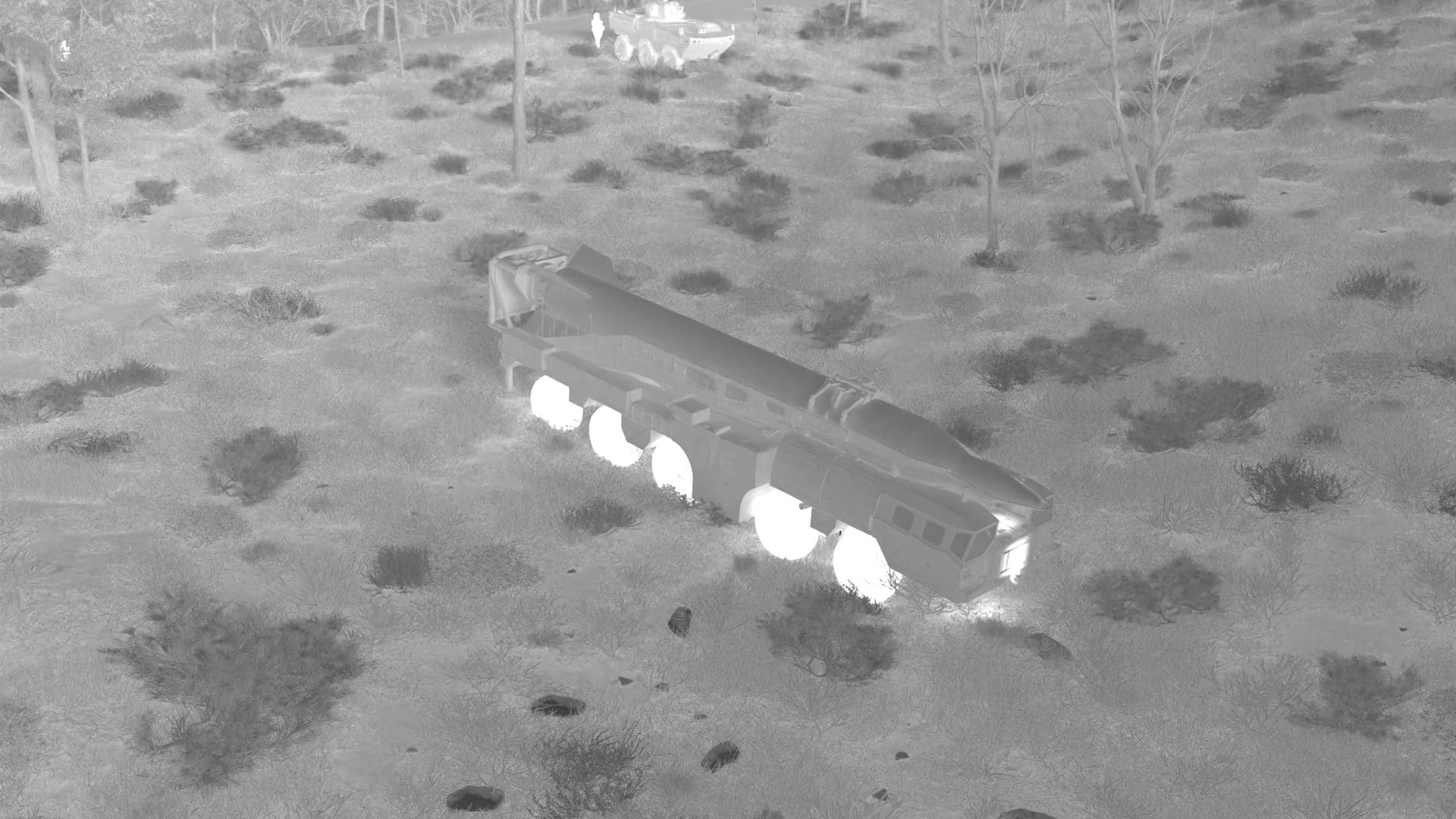 EO · DAYLWIR 8–14 µM
A thermal image is not a grey photograph. It is a radiance measurement, and it obeys physics a colour pipeline knows nothing about. GAIA generates synthetic infrared imagery from that physics.
Radiance, not recoloring
GAIA derives LWIR output in the 8 to 14 µm band from material emissivity and thermal history, not from a tone-mapped copy of the visible render. More than 260 materials carry characterised infrared properties.
An idling engine block, a tarp that cooled all night and a sun-loaded steel roof each radiate on their own curve. At dawn they cross over, the way they do in the field.
Thermal crossover, on demand
Twice a day a target radiates much like its background, and detection gets hard. Real footage of that window is rare. In a synthetic scene crossover is a parameter: set the hour, the weather and the thermal history, and generate as many frames of that window as your model needs.
One scene, two bands
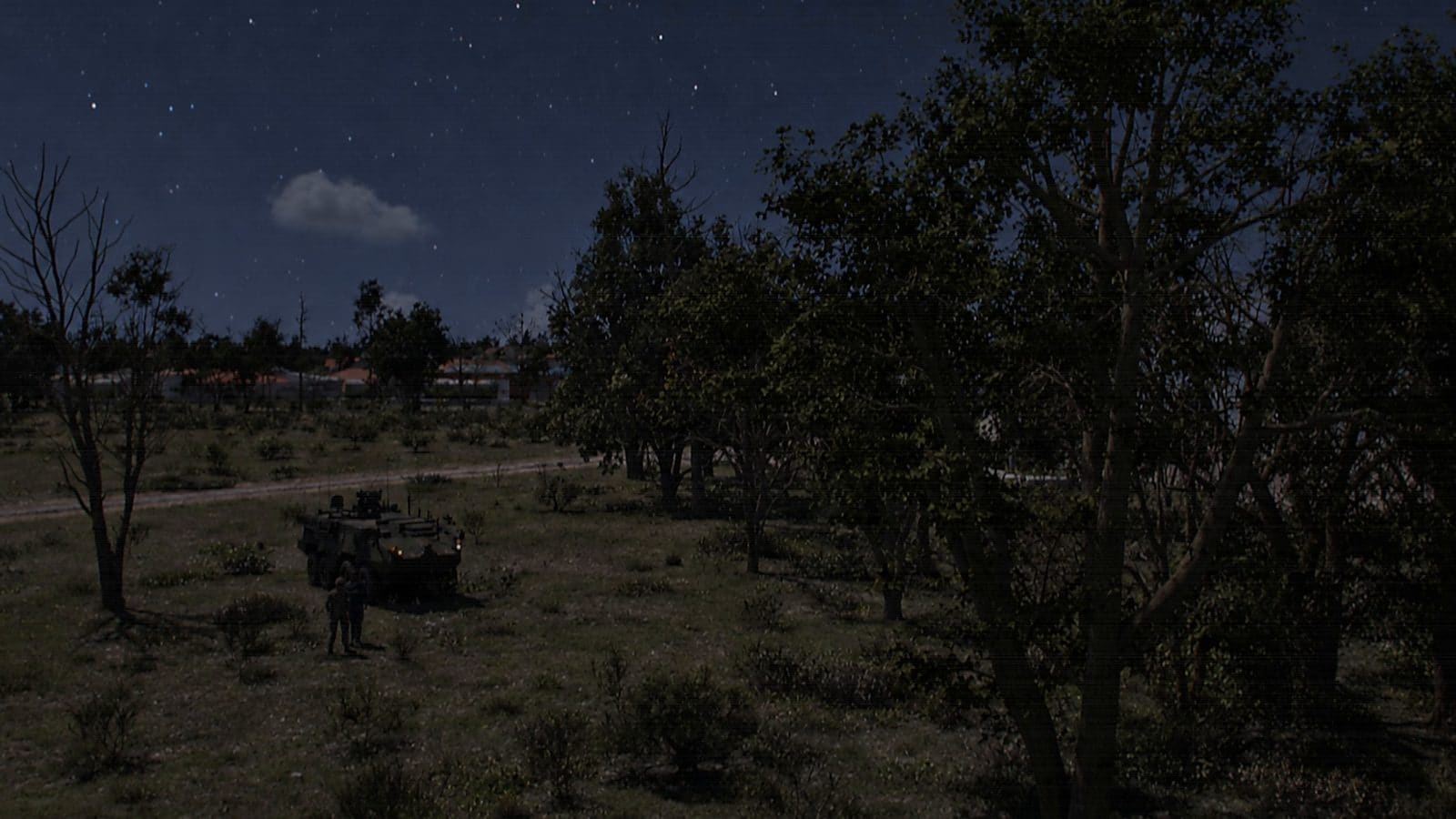
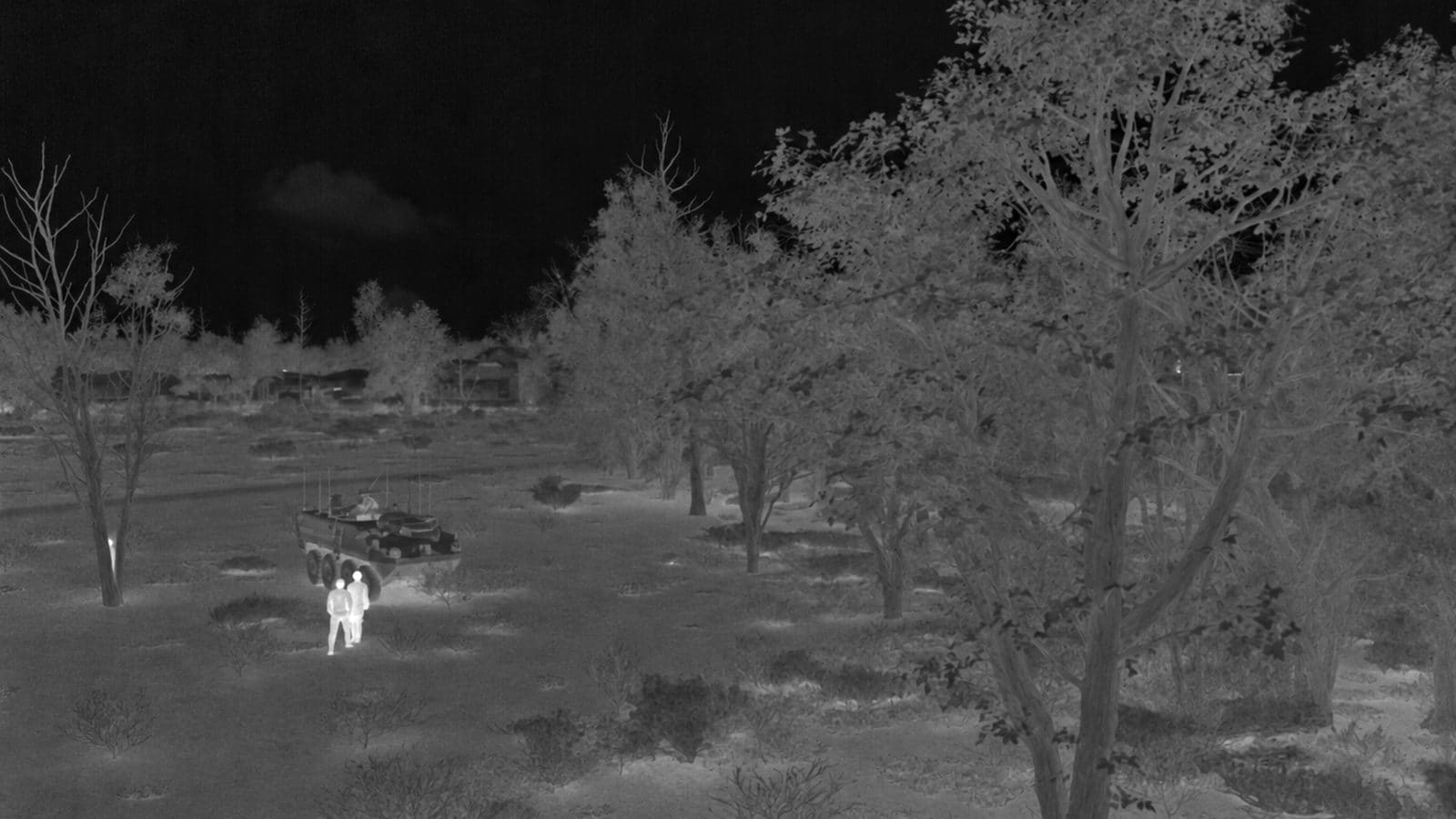 EO · NIGHTLWIR · NIGHT
A range of plausible thermal signatures for each target
In the field, infrared appearance depends on weather, sea state, time of day, operational status and sensor settings. A robust model has to learn across that variability rather than overfit to one rendering. Each LWIR image GAIA generates is one plausible sample, drawn from a physically grounded envelope.
What drives each infrared image
- Hemispherical emissivity
- Roughness
- Reflectance of metals
- Refraction index of paint, glass and composites
- Thermal inertia: how fast a surface heats and cools
- Air temperature range
- Water temperature range, for target and sea contrast
- Sea state: wave height and surface agitation
- Environmental radiance reflected by surfaces
- Day or night
- Engine, machinery and exhaust heat
- Scaled from still and cold to full regime and hot
- Band, 8 to 14 µm
- Temperature window mapped to the dynamic range, which sets contrast and saturation
- Noise, non-uniformity and dead pixels, applied in post-processing
Every parameter is sampled within realistic bounds, so each image stays physically plausible and the same target appears with several valid signatures across a dataset. That variability is what makes the data useful for training. The imagery is physically based but not radiometrically calibrated: absolute temperatures should not be read from it.
The array is part of the image
Uncooled microbolometers add their own signature: fixed-pattern noise, non-uniformity, dead pixels, halo around hot targets. GAIA then post-processes each image with the sensor model, matched to the array you fly, so the detector learns on the artefacts it will meet.
Our results are validated against real-world use cases.
On a vehicle-class automatic target recognition (ATR) benchmark, adding the full sensor model moved AP50 from 0.61 to 0.85 on the same evaluation set, with zero real frames in training.
Paint the thermal signature of your own 3D assets.
With the Custom Asset Importer, you paint the LWIR response of each surface directly on the asset and check it in an infrared preview. The signature never leaves your environment. Custom Asset Importer →
From detection to guidance
Thermal crossover also affects guidance: a seeker can lose lock when target and background radiate alike. SAPHIRA trains that case in closed loop.
See it on your sensor.
Bring the datasheet of the array you fly. We model it and generate a sample of synthetic infrared imagery on your target class.