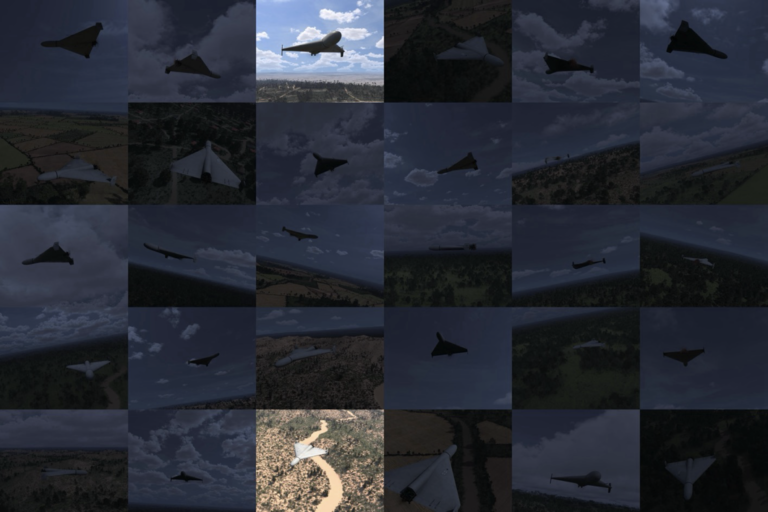
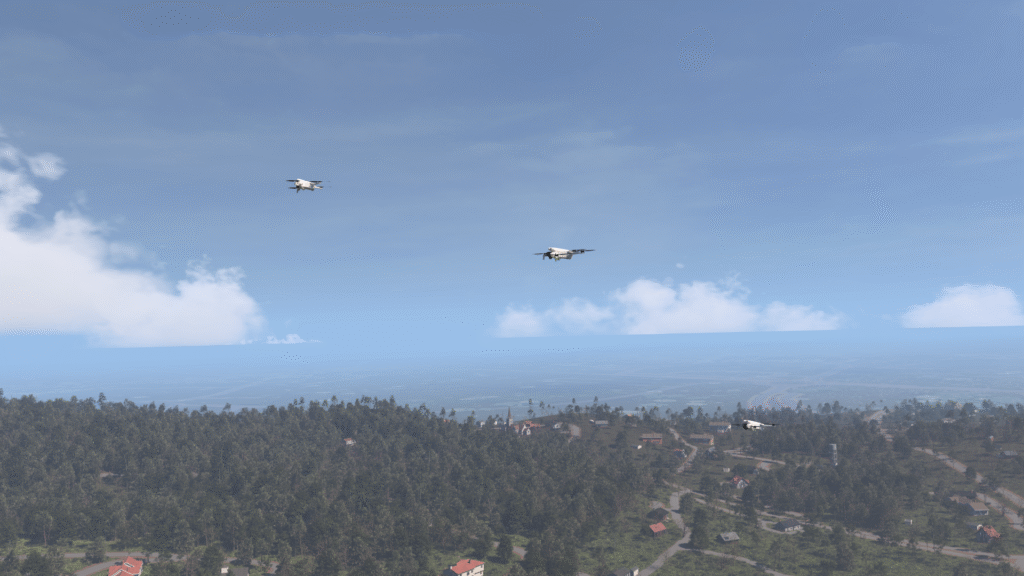
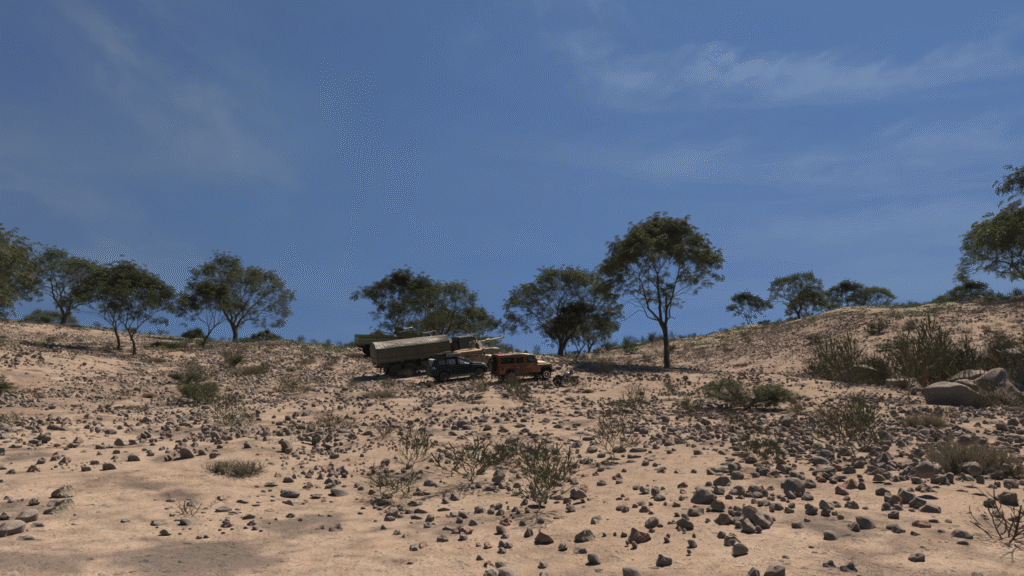
Synthetic training data is artificially generated imagery: built from 3D models, physics-based rendering engines, and procedural algorithms that replicate real-world visual conditions without requiring cameras, field teams, or labeling contractors.
For computer vision engineers, the bottleneck has never been the model architecture.
It’s the data. Collecting real imagery at scale requires access to environments that are expensive, dangerous, or, in defense and autonomous systems applications, operationally impossible.
Annotating that imagery adds weeks: a 100,000-image defense dataset with 8 annotation types typically costs $80,000–$150,000 in manual labeling, takes 6–12 weeks, and requires security clearance when handling classified scenes.
Generate the images when you need them.
Gain complete control over configurations, including scenes, sensors, lighting, activities, labels, and more.
Eliminate privacy concerns by avoiding the use of real-world data.
AI Verse’s procedural engine eliminates computer vision data bottleneck.
Define your parameters: object classes, environments, lighting, sensor type, weather, viewpoint, etc., and the platform generates fully annotated images in 4 seconds on 1 GPU, at any scale, with pixel-perfect annotation.
PROCEDURAL SCENE GENERATION
Scene Layout: Stochastic Decomposition Trees
3D Standardized Assets Database
3D SCENE
IMAGE
RENDER
Complex Labelling
Materials Database
Light Sources
Virtual Camera Controls and Properties
With AI Verse’s procedural engine, training datasets that once took teams three months to build can now be completed in hours. And unlike real-world data, any scenario; adverse weather, rare object configurations, sensor failures, edge cases; can be generated on demand.
Generate one fully labeled image in just 4s!
Generate all edge cases to improve your models’ accuracy!
Launch faster than ever before and gain a competitive edge!
There are 8 pixel-perfect labels included: Classes, Instances, Depth, Normals, 2D/3D Bounding Boxes, 2D/3D Keypoints, Skeletons, and Color.
Users select the desired parameters for the environment, scenes, objects, activities, lighting, and more. Based on these criteria, our engine can generate an unlimited number of diverse, varied, and labeled images ready for AI model training.
Yes, our automated system ensures that each generated image contains 8 pixel-perfect labels, reducing the risk of inaccuracies and guaranteeing the highest data quality.
Our proprietary procedural technology generates images based on human input. Users select various criteria for the image from a menu in a step-by-step process, rather than typing a prompt into a GenAI tool. This approach minimizes mistakes and ensures the highest possible realism in our images.
It takes 4s to generate one labelled image on 1 GPU. Generation can be spread across several GPUs (max 10).