Anti-drone detection, trained on the airframe before it reaches you.
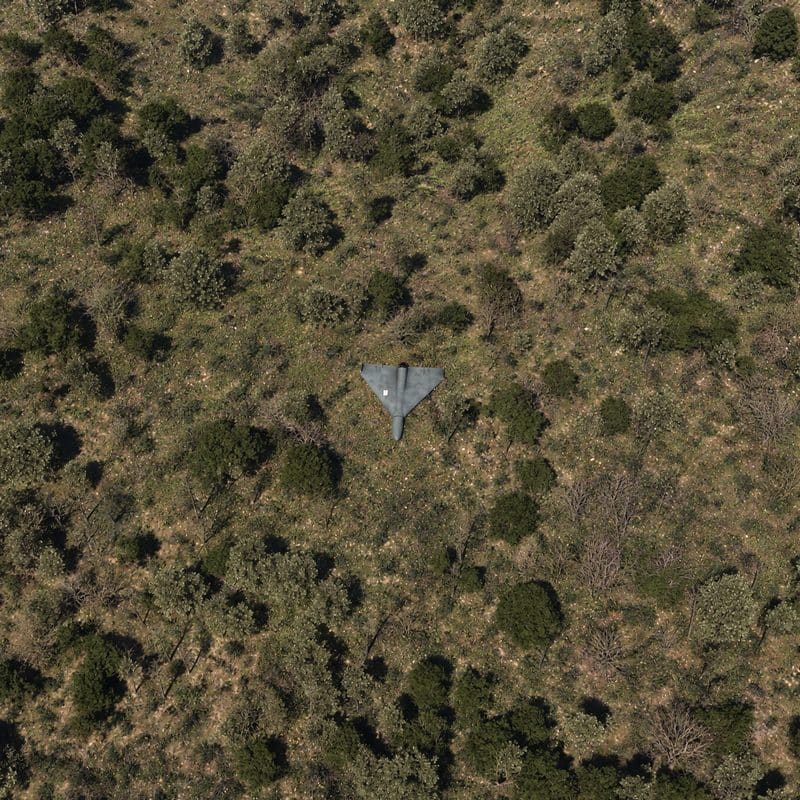
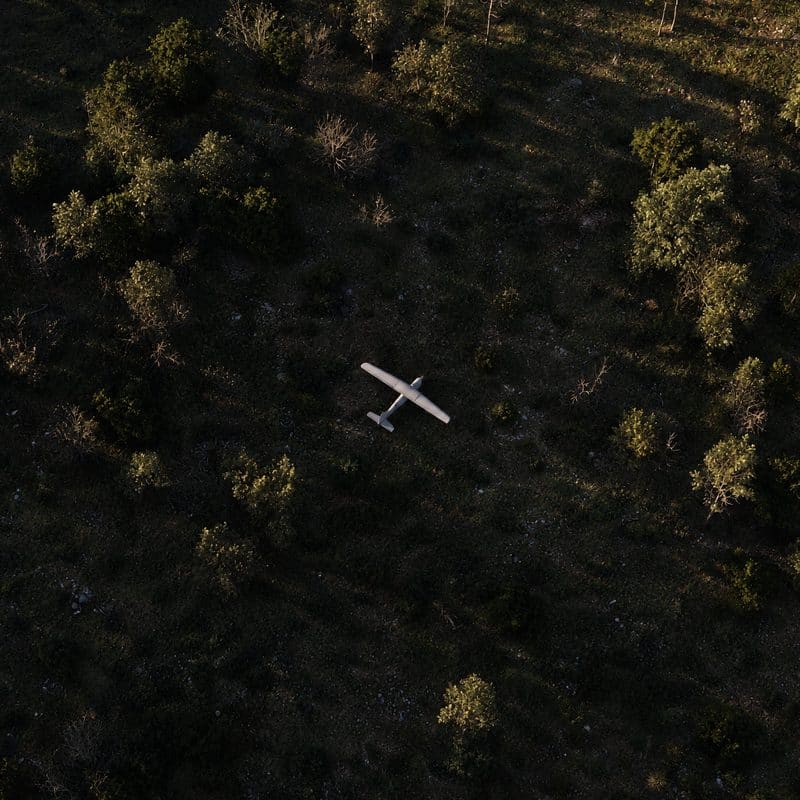
Shahed-type one-way attack UAVs, delta-wing loitering munitions and quadcopters. We generate them across the light, range and background your C-UAS sensor will meet in the field.
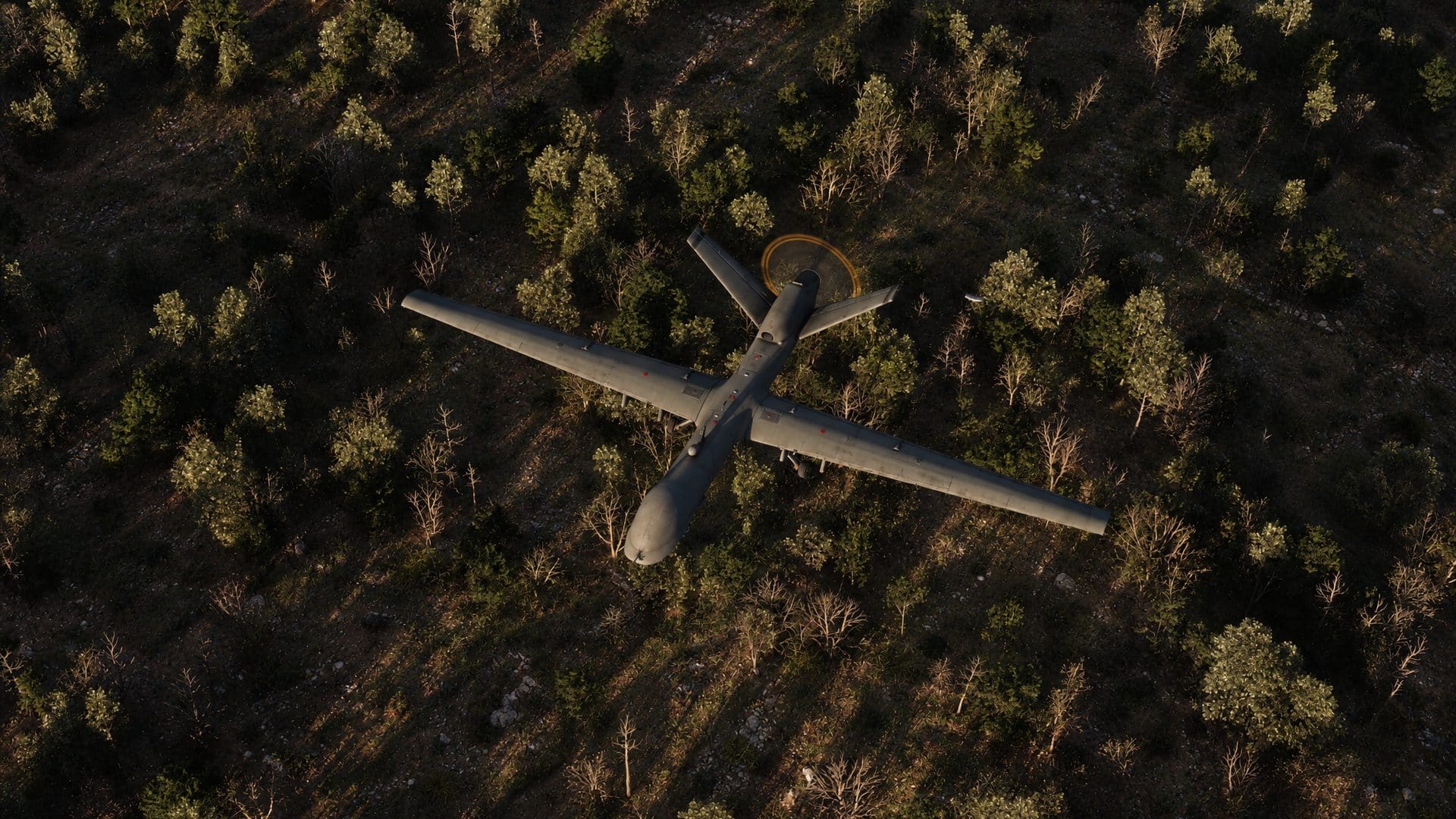
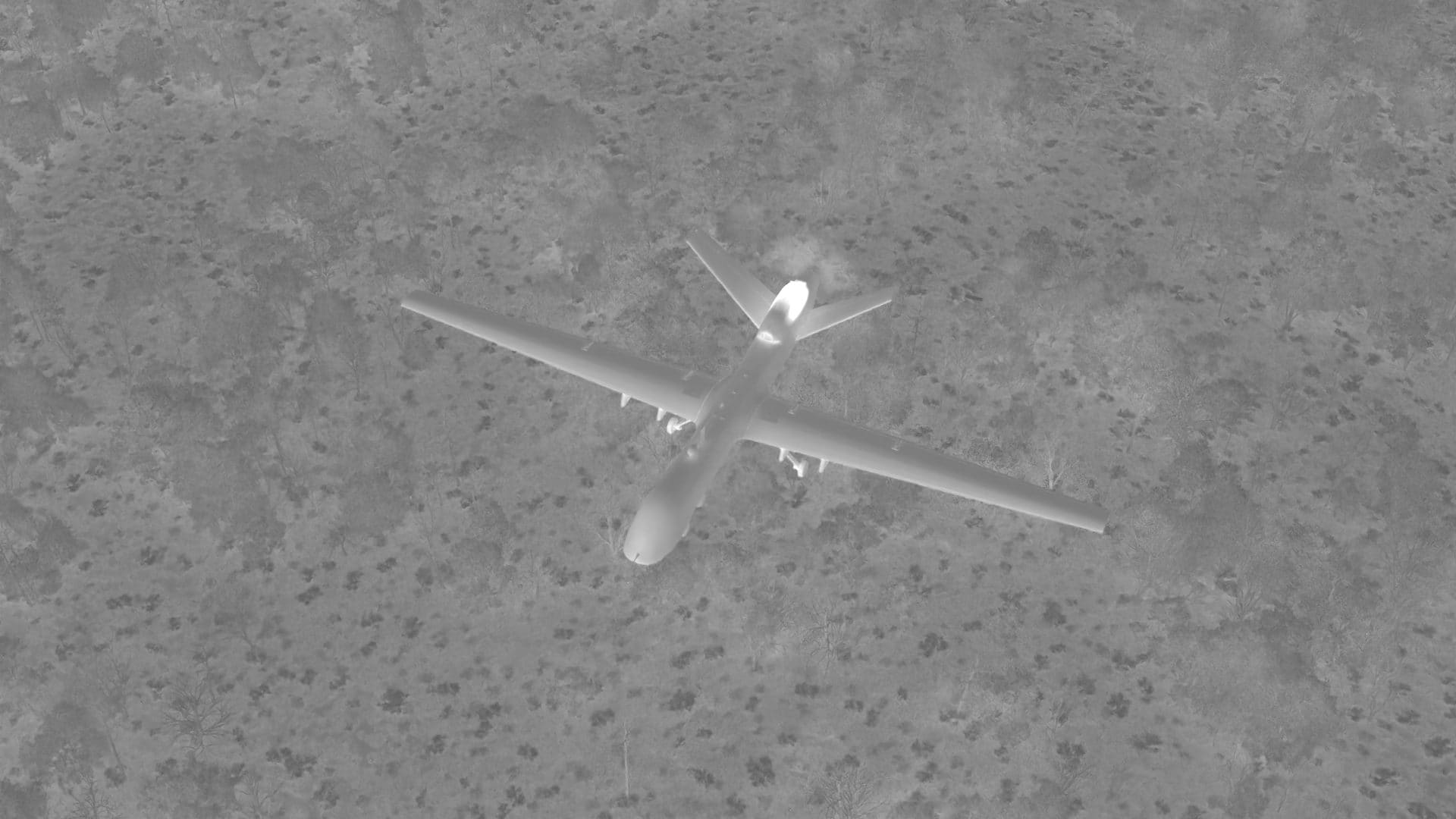 EO · DAYLWIR · DAY
Three ways a C-UAS dataset runs out.
The airframe is new
Variants appear faster than anyone can film them. By the time footage of a configuration exists, it has already been fielded against you.
The target is tiny
At acquisition range the drone covers a few dozen pixels. Real footage of that regime is scarce and almost never labelled.
The background does the damage
Clean sky is the easy case. Tree lines, roofs and horizon clutter are where recall collapses, and where collection is hardest.
Clean sky is not the test.
The same airframe and sensor against two backgrounds: clear sky, which most models handle, and clutter, where they fail.
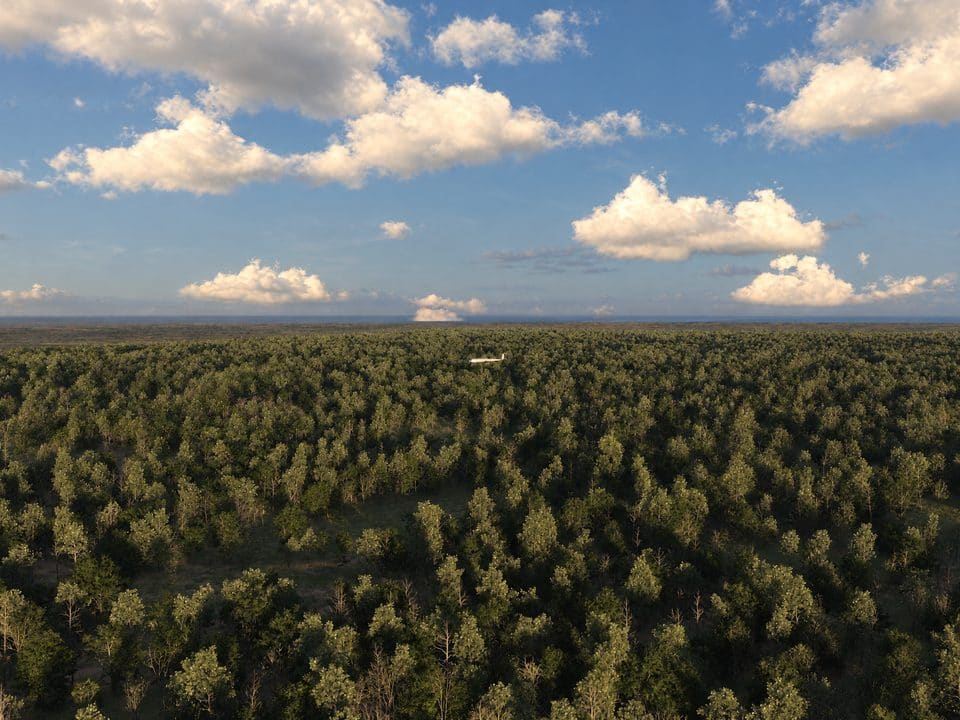
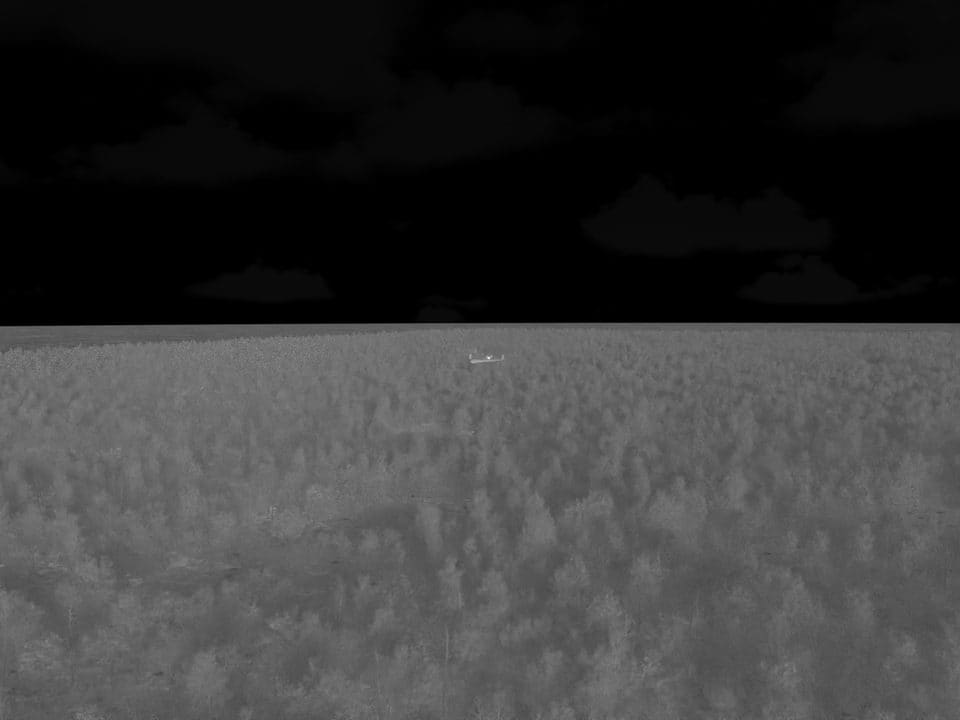 EO · DAY · SKY
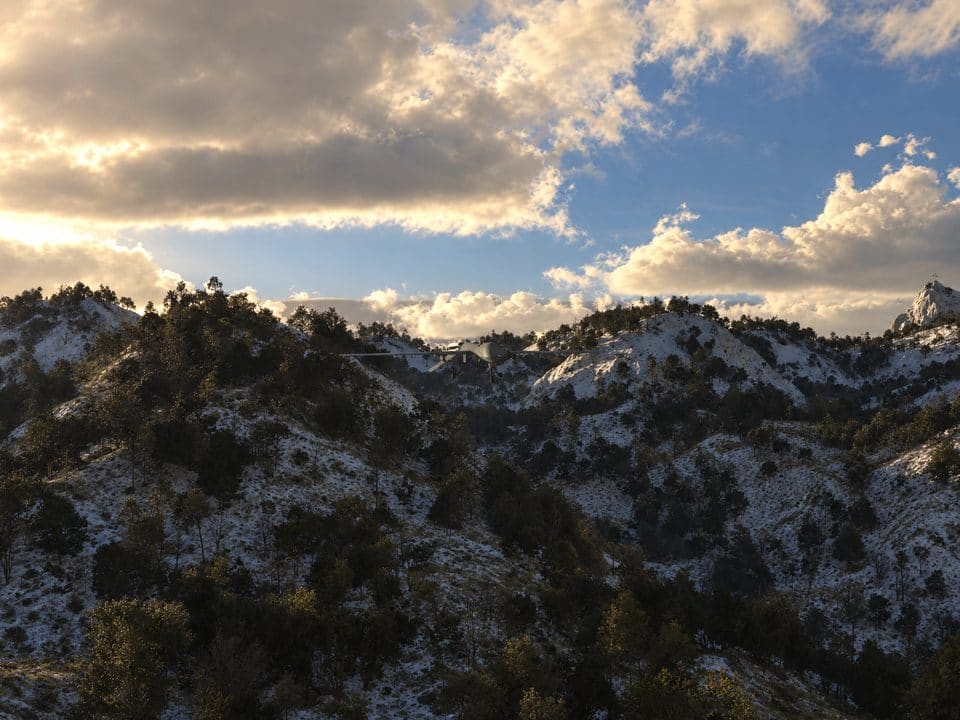
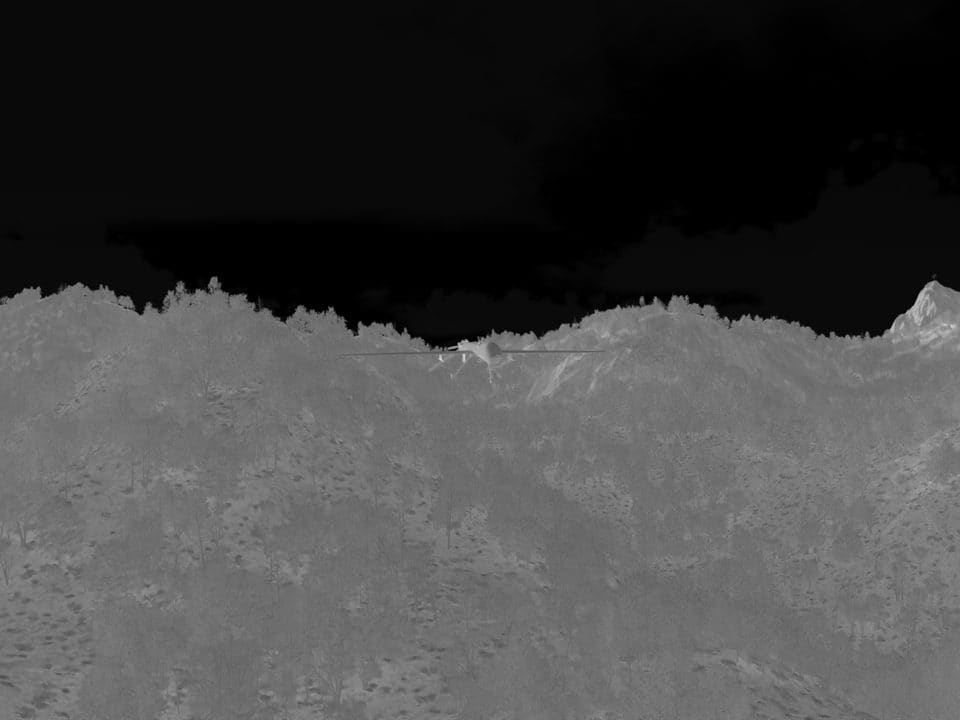 EO · DUSK · RIDGE
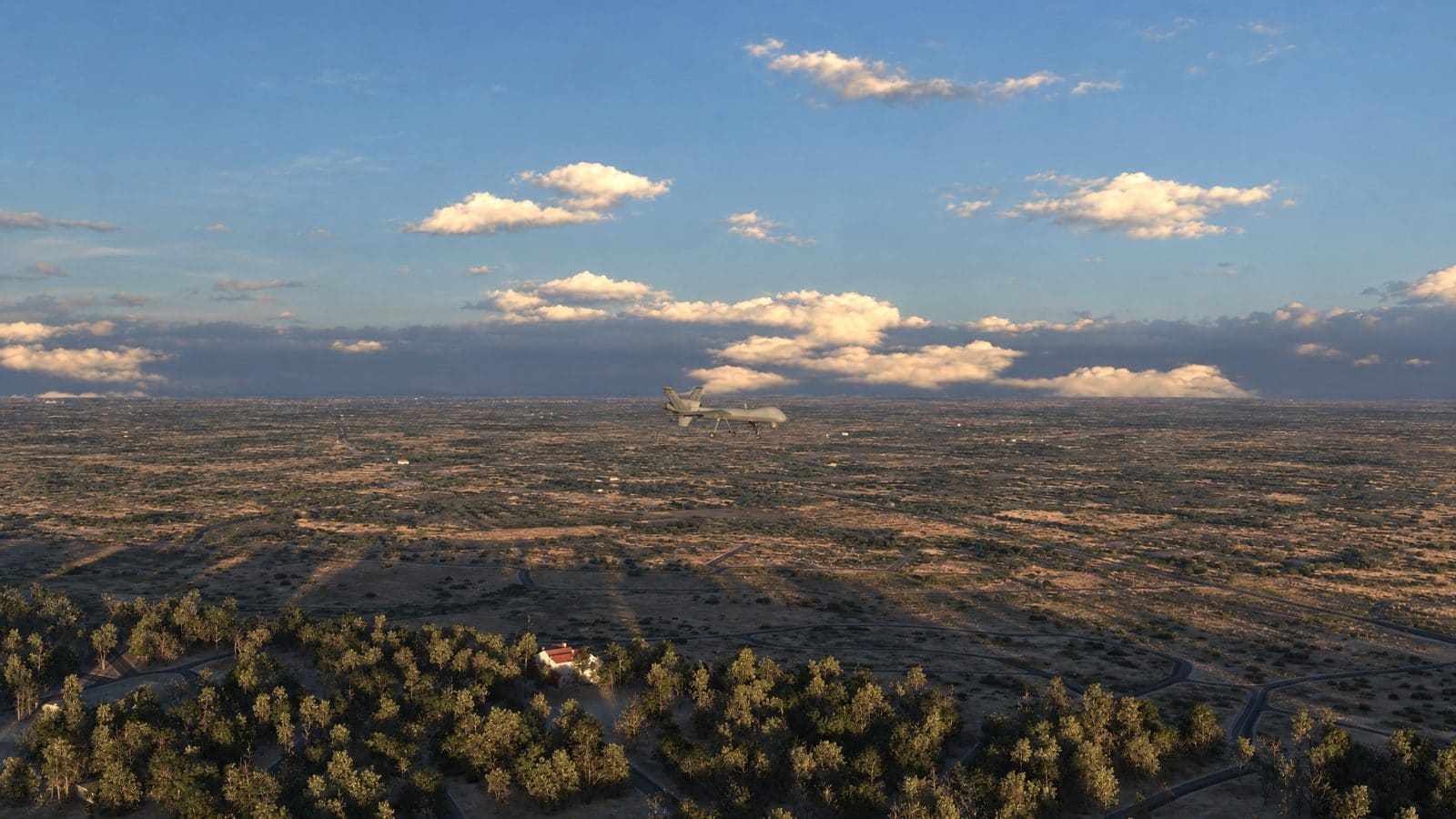
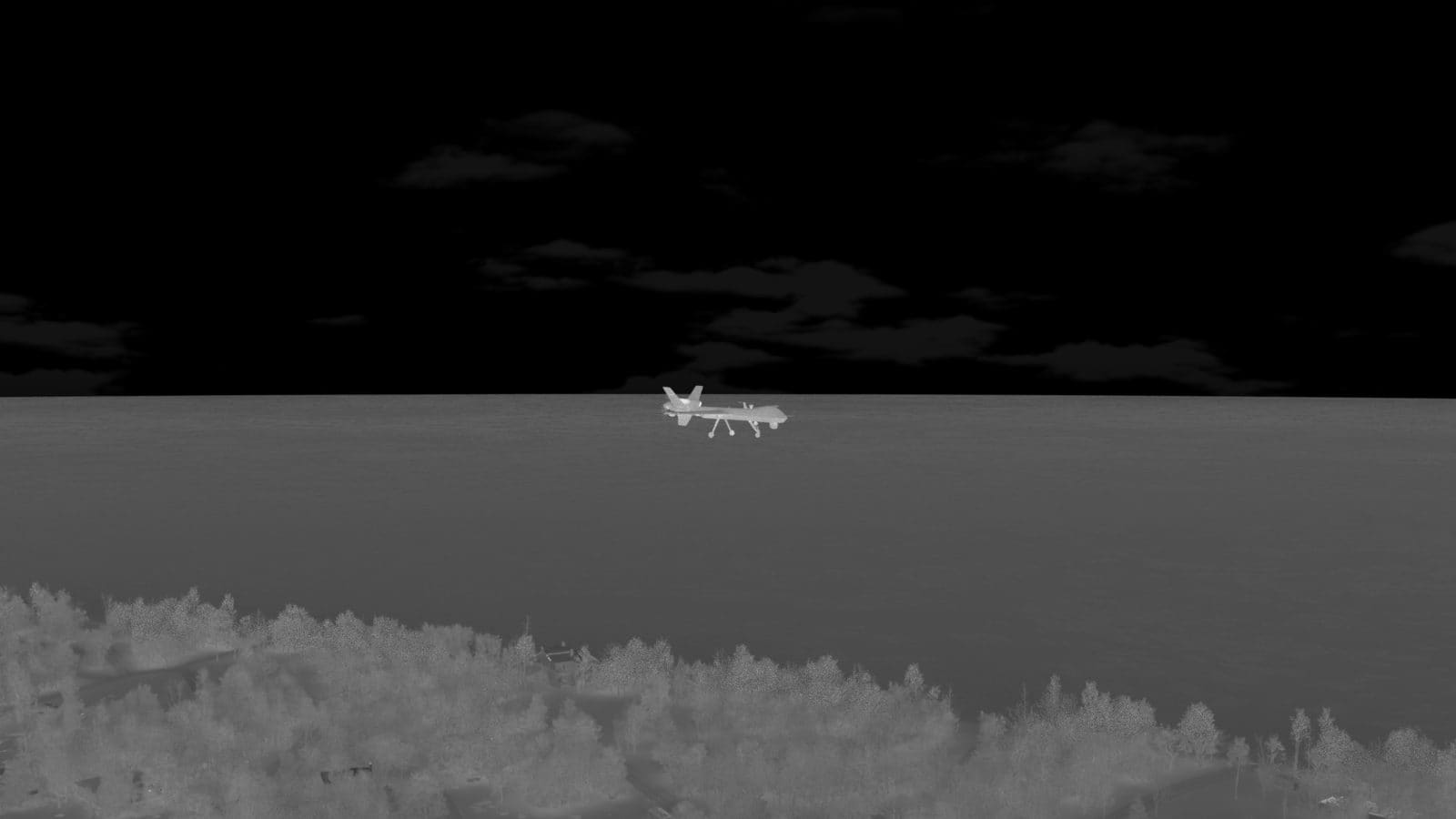
At acquisition range the target is forty pixels
 EO · LONG RANGE
Against moving cloud, the drone is a handful of pixels. Small-object detection needs volume at exactly the scale that is hardest to film, and it needs the negatives too: birds, debris, lens artefacts.
Range, altitude and focal length are parameters, so you can sweep them: same airframe, same trajectory, target size stepped from acquisition to terminal.
- Pixels on target swept across the engagement envelope
- Field of view and resolution matched to your array
- 2D boxes and full 3D pose at every range
Most threats come at night
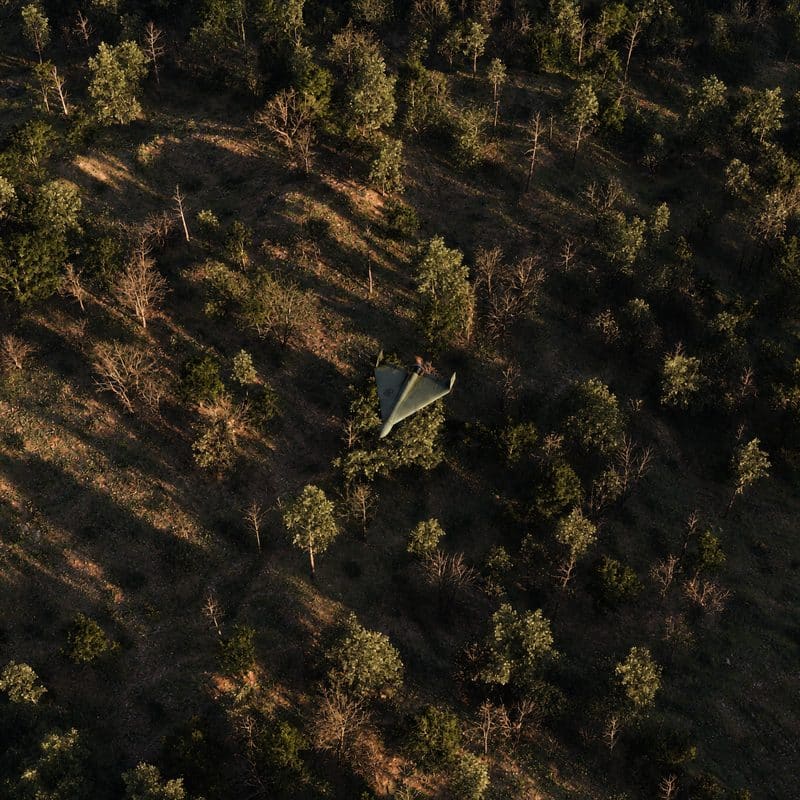
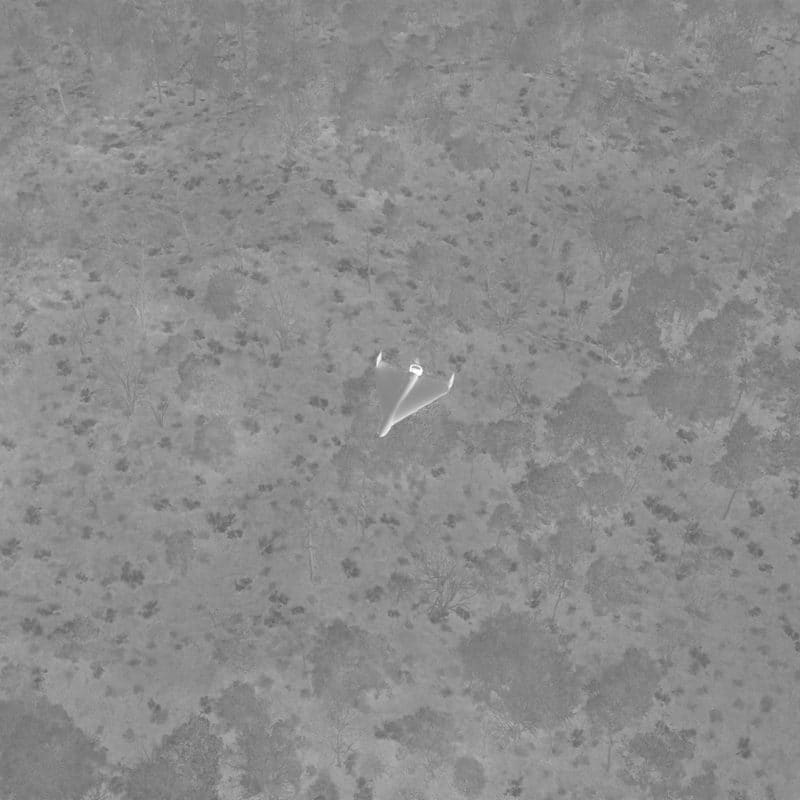
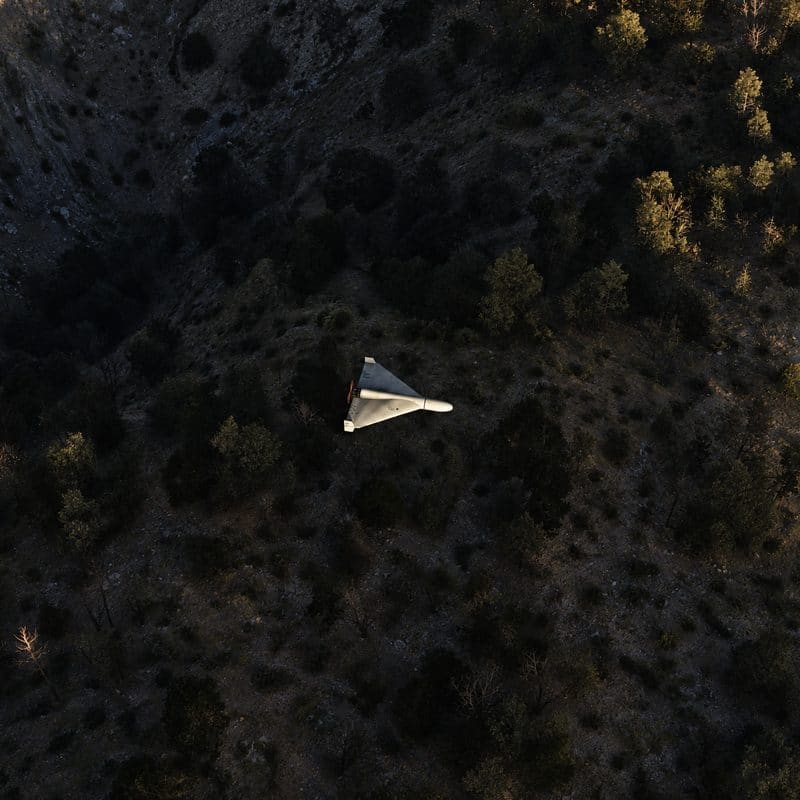
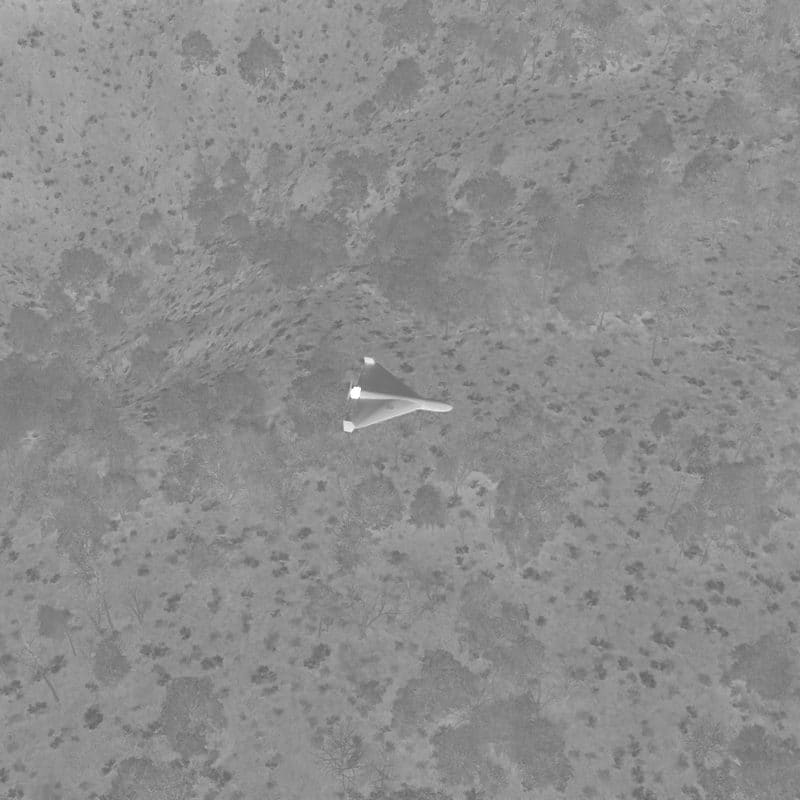
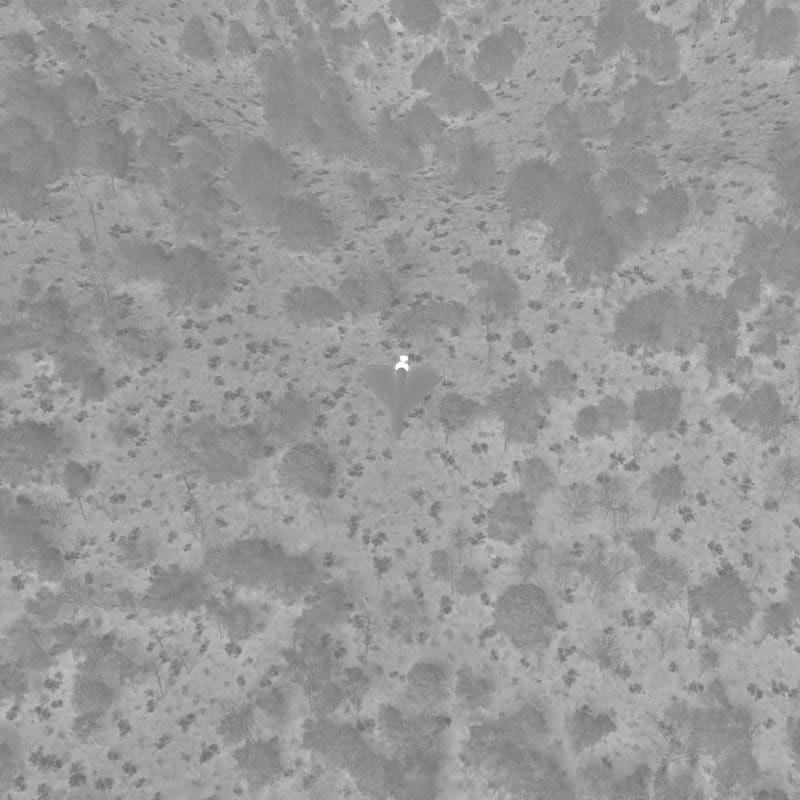
Dusk and night are the main operational case and the least covered by real data. We generate EO at low light, and LWIR where the visible band gives up. Both bands come from the same geometry and thermal state, pixel-registered, so labels carry over without a second annotation pass.
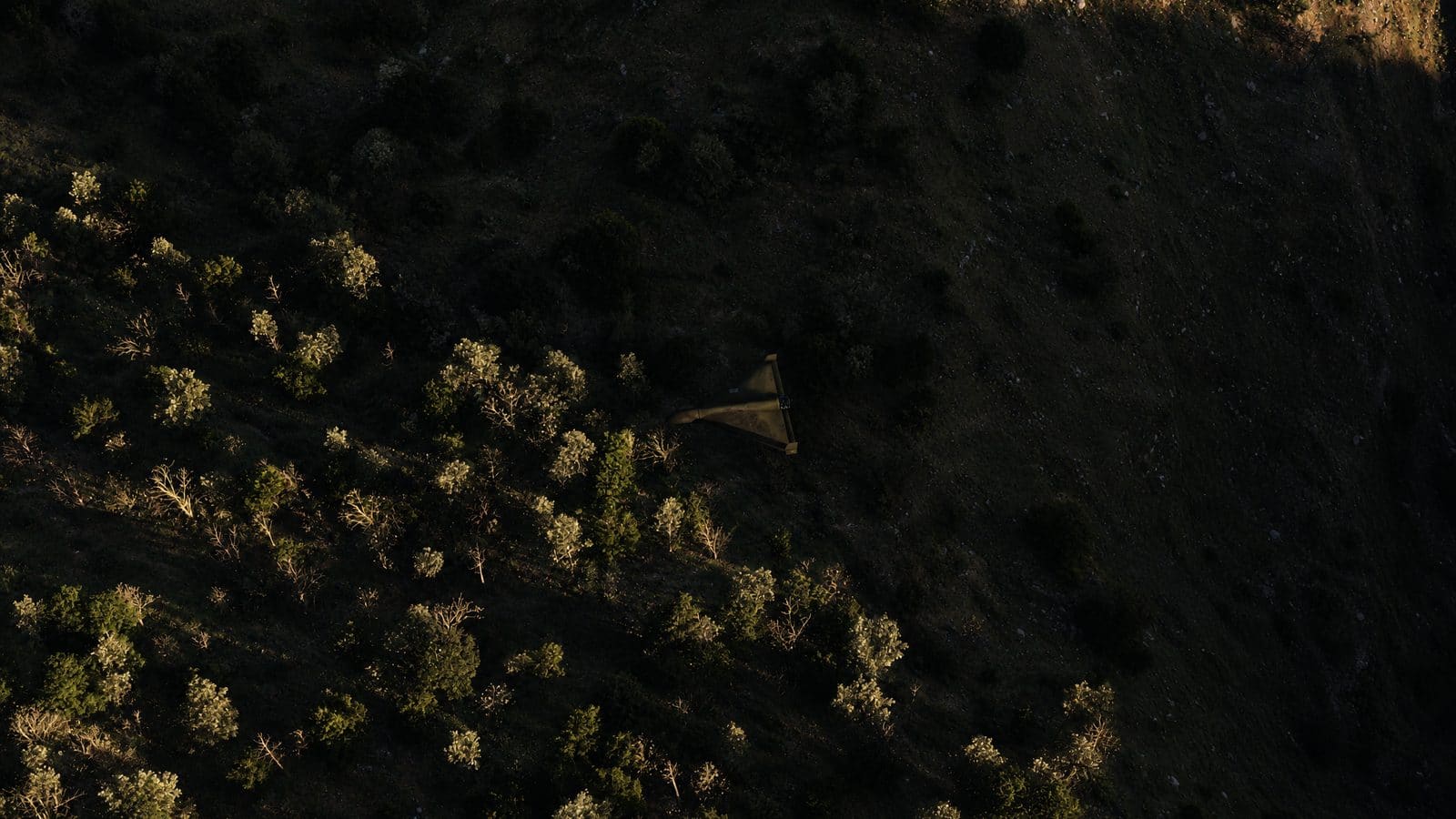
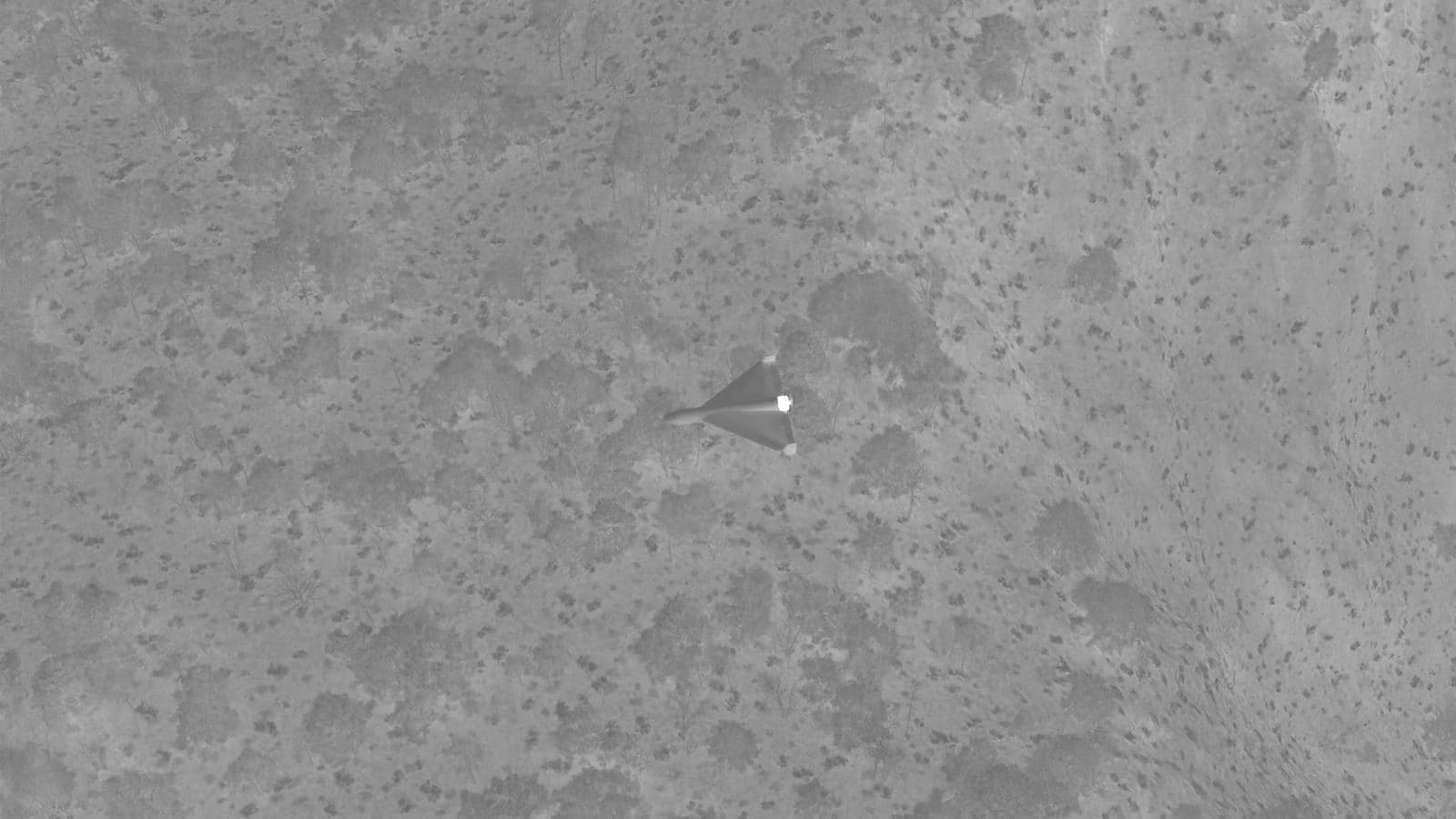 EO · DUSK
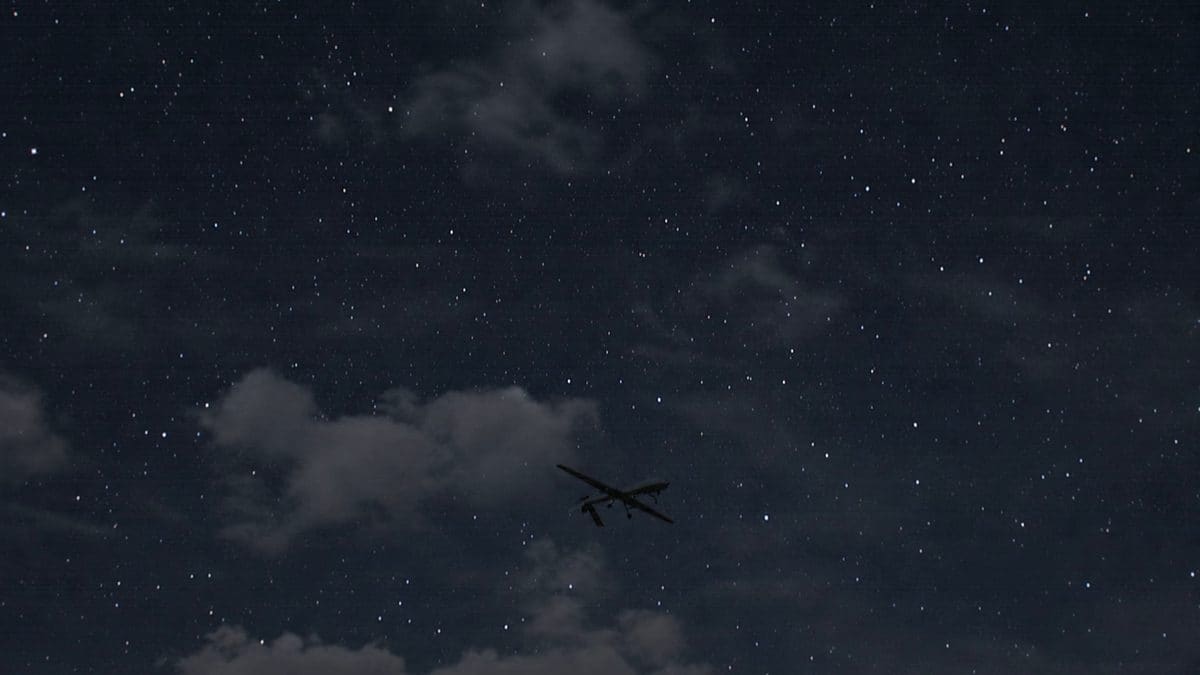
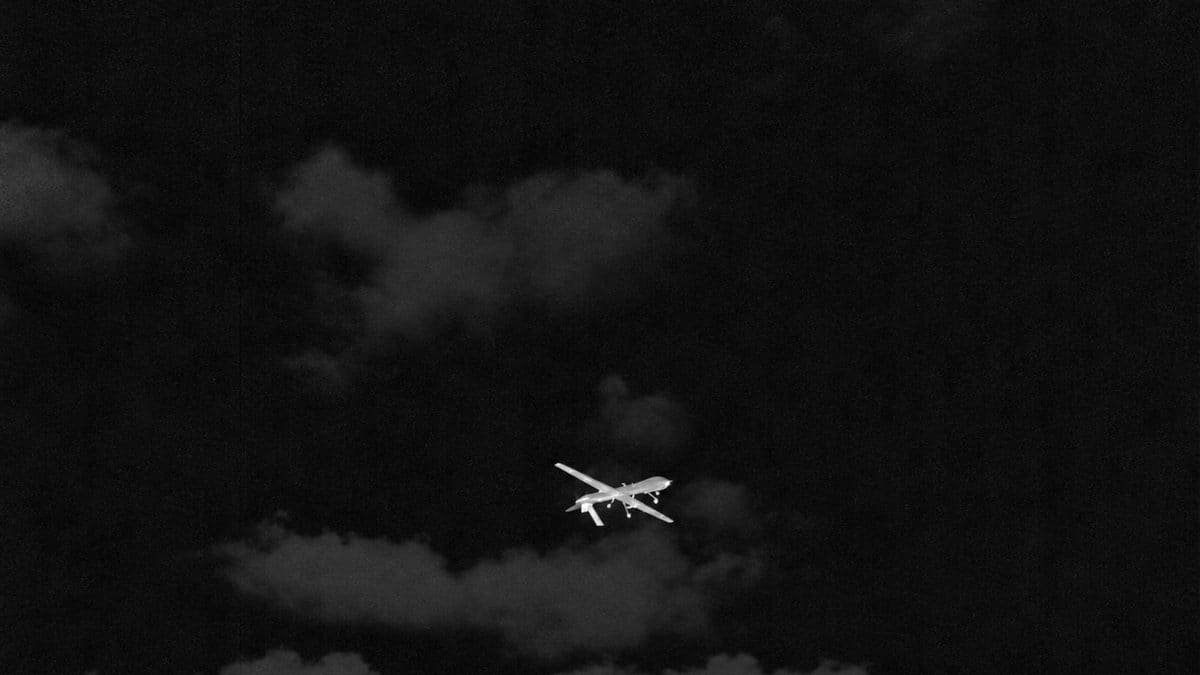 EO · NIGHT
One airframe, the whole envelope.
Light, altitude, aspect angle, terrain. Every frame carries its full ground truth, generated with the image rather than annotated after it.
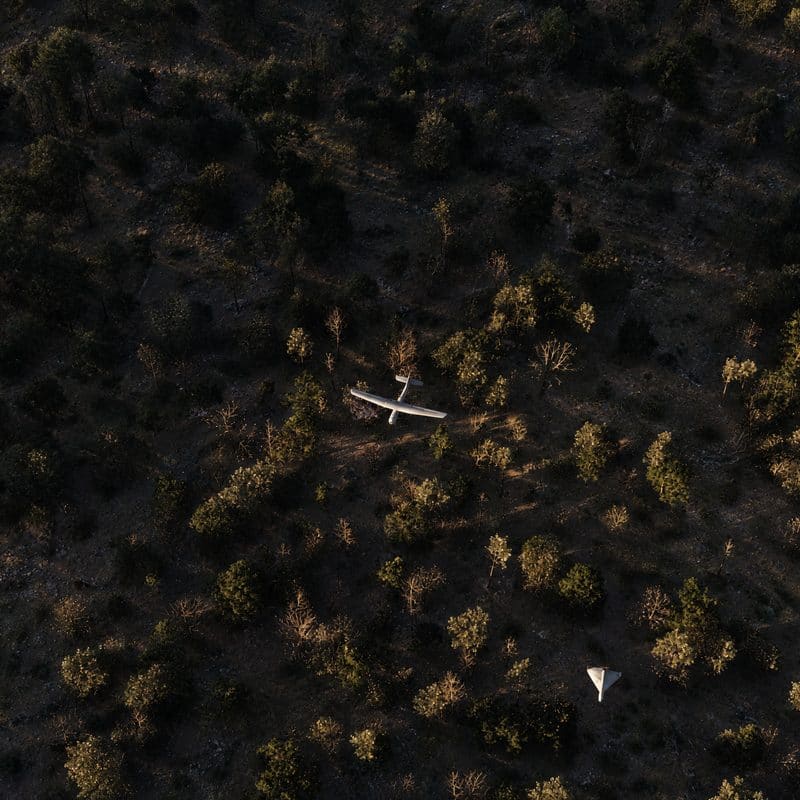
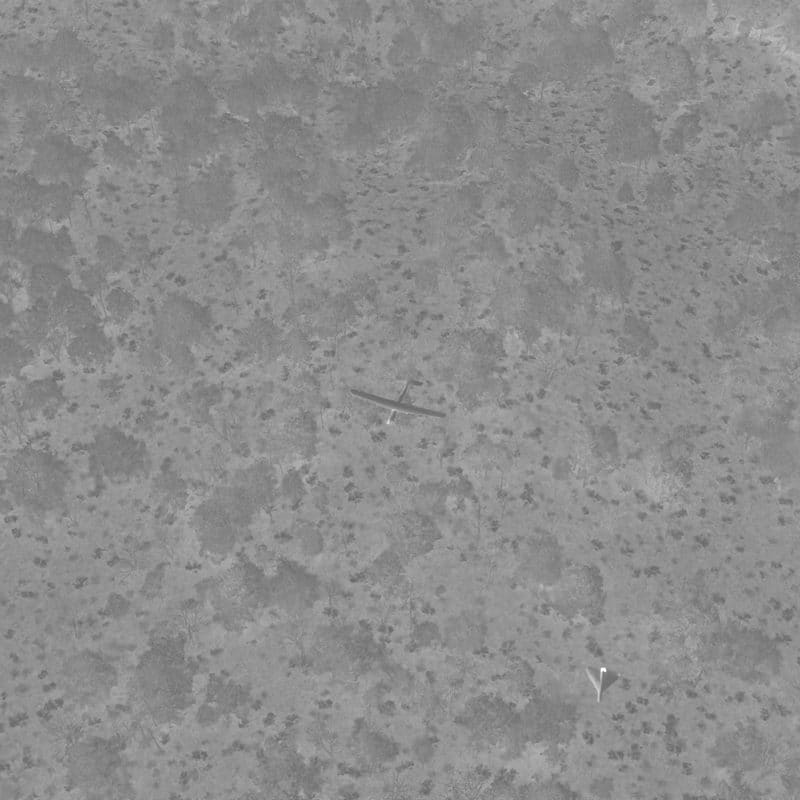 EO · DUSK
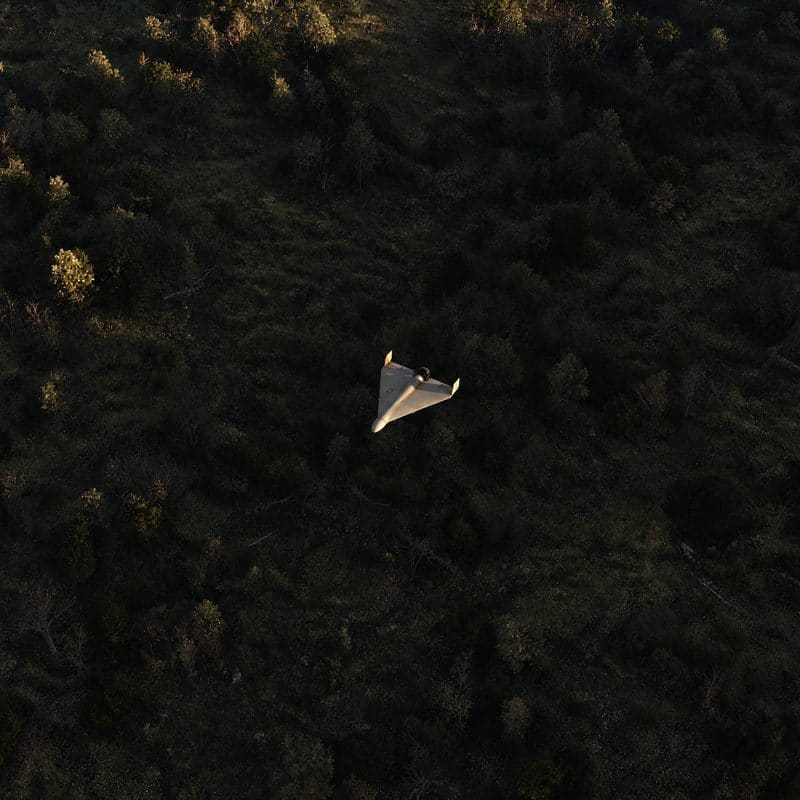
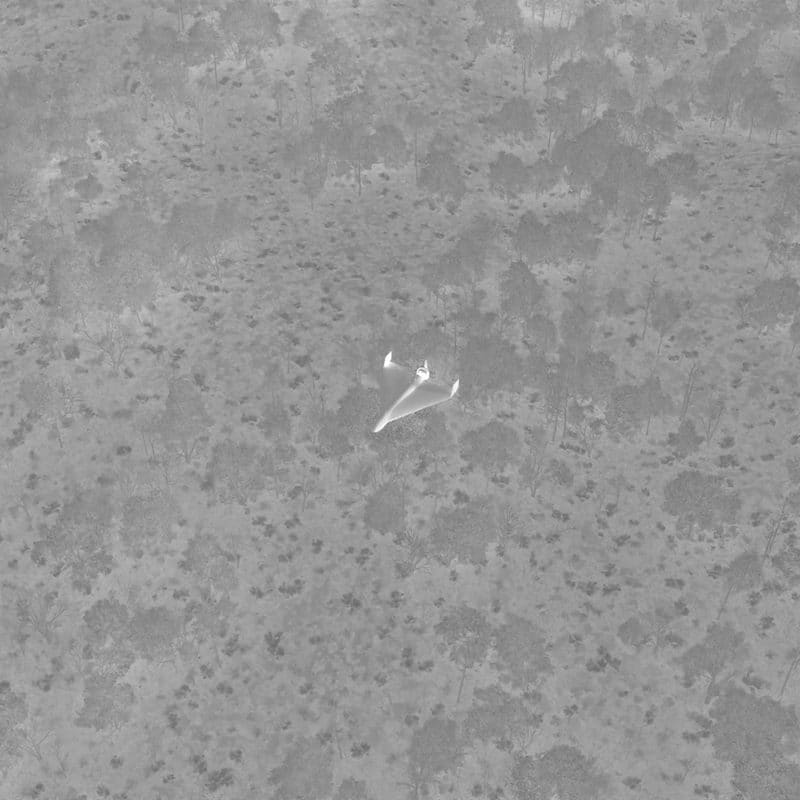 EO · DAY
 EO · DUSK
 EO · DUSK
 EO · DAY
 EO · DUSK
Detecting it is not stopping it
Detection gets you the track. The interceptor still has to close on a manoeuvring target in a few seconds of flight, against decoys, after occlusion. You cannot fly that a thousand times, so it has to be trained in simulation. SAPHIRA runs your guidance code inside the same scenes, from December 2026.
0.989 mAP50, on synthetic data alone.
A German counter-drone company trained and evaluated detection models across two simulated camera configurations, on synthetic imagery only. The targets were rotary-wing drones, not the airframes shown on this page, but the method is identical.
The synthetic dataset supported very strong drone detection on the teleobjective camera, where the drone presents as a medium-size target.Reported by the customer
Real plus synthetic: +5.4 AP in EO, +2.9 AP in LWIR.
A European drone manufacturer added AI Verse data to its own real dataset. Real images carried most of the score; the synthetic set covered what they could not reach: rare angles, small and distant targets, false positives.
Deep dive into AI Verse’s technology
Detecting drones from synthetic data alone.
Two camera configurations, 17,000 frames, results reported by the customer.
Synthetic infrared imagery
Radiance from material physics across the 8–14 µm band.
SAPHIRA · closed loop
Train the interceptor, not only the detector. Closed beta in December 2026.
Name the airframe. We generate the envelope.
Bring the target class and the sensor you fly. First output two weeks after the scoping call.