Your guidance code, inside the simulation.
Closed-loop simulation for detection and guidance. Your guidance code runs inside the scene. It receives the sensor feed, sends its commands, and the scene responds.
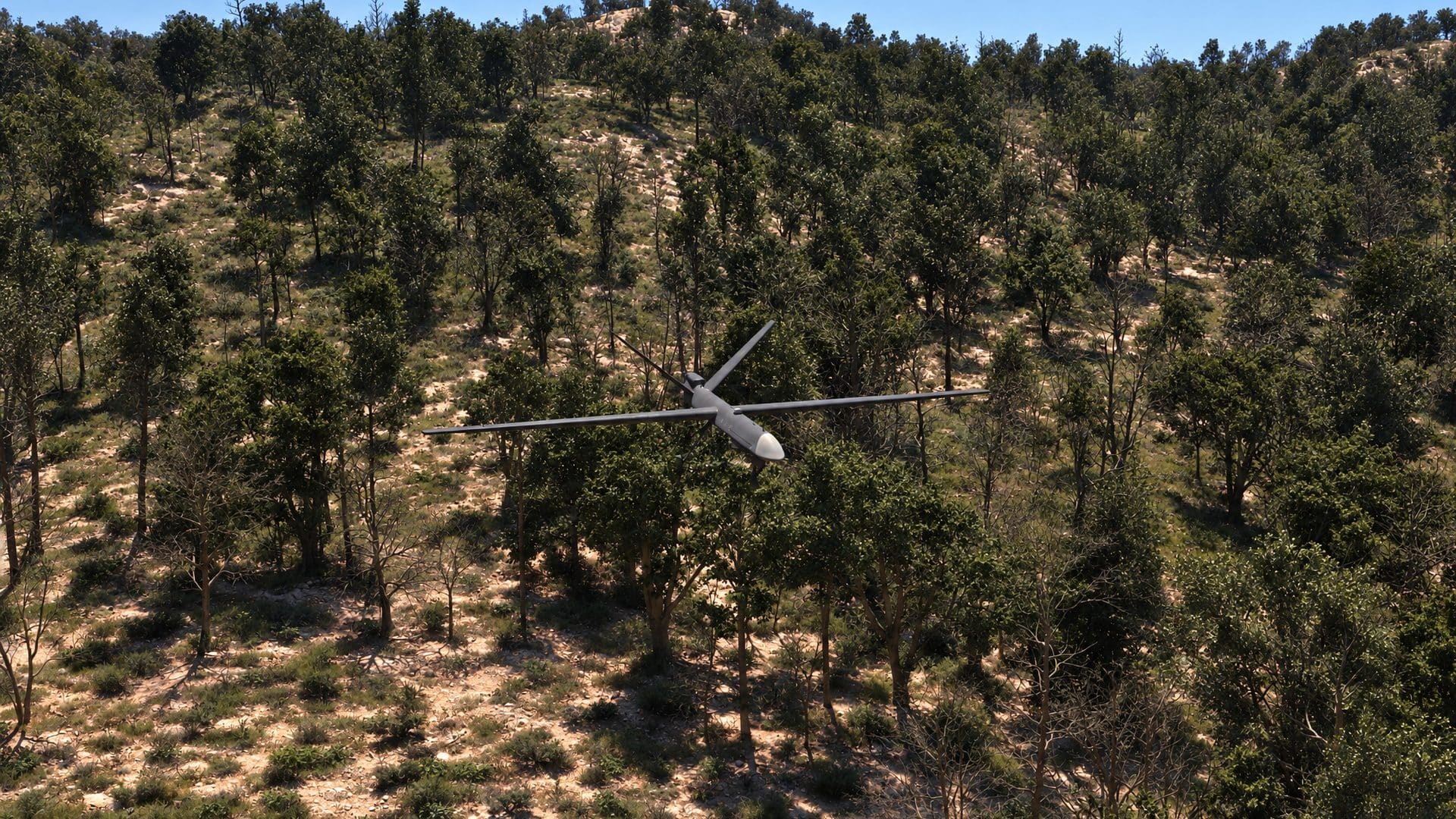
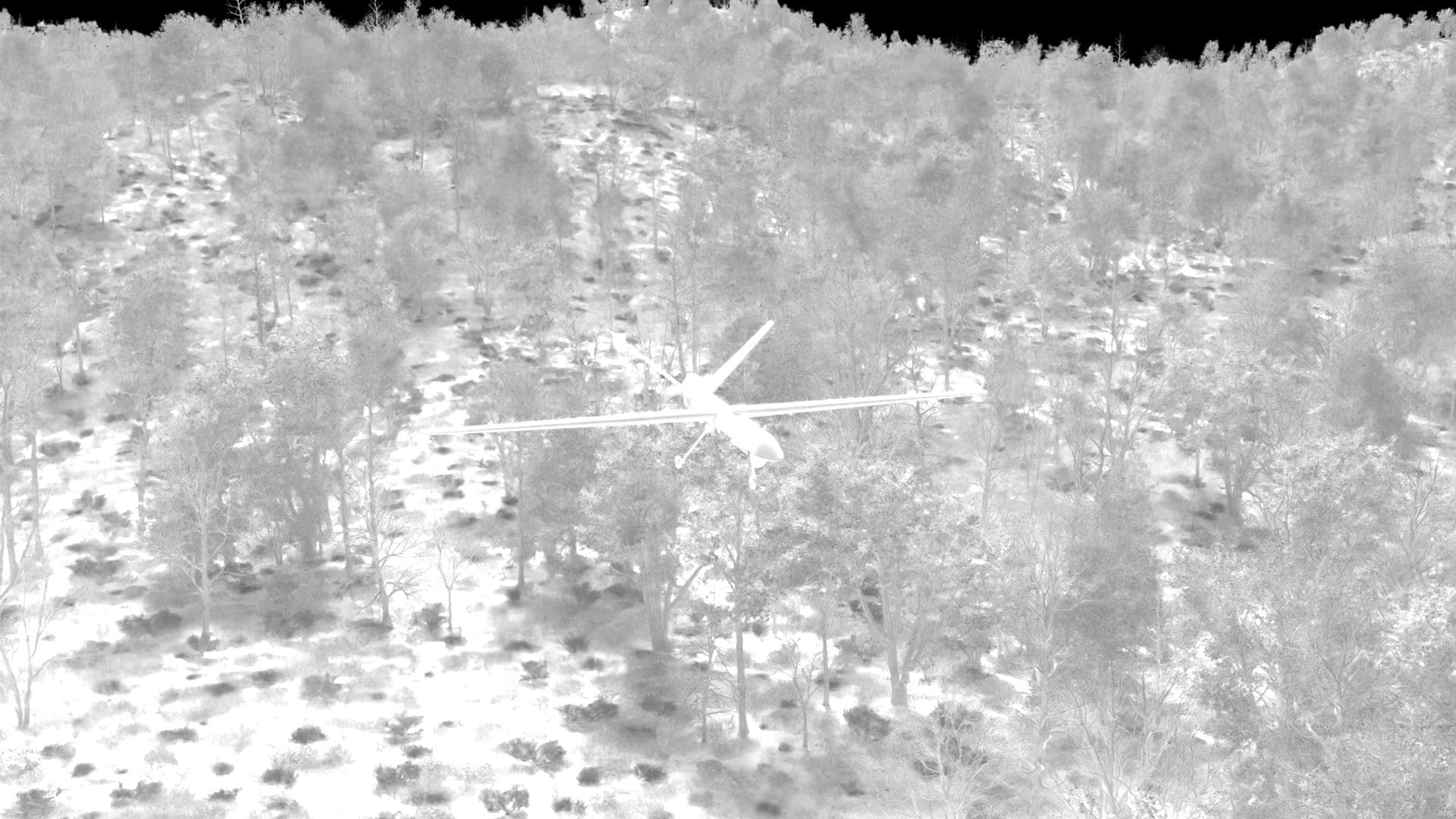 EO · DAYLWIR · DAY
Three problems training data alone cannot solve
Target acquisition and tracking
Re-acquisition after occlusion, against decoys, across sensor handover. Replay the same engagement as often as you need, which no range slot or flight test allows.
Trajectory planning
Manoeuvring targets, evasive patterns, terrain masking. Every run can be repeated with the variables you choose.
Swarm coordination
Task allocation, de-confliction, degraded comms. Add fifty aircraft without adding a single flight authorisation.
How closed-loop simulation works: sensor in, command out
the same loop
Who runs what
Scene, sensor model and command execution
Your detection and guidance code, plugged in unmodified
December 2026
December 2026
Your stack runs unmodified. SAPHIRA feeds it the rendered sensor stream, EO or LWIR, with the full GAIA sensor model. It then executes the commands your stack returns. The scene reacts: the target manoeuvres, the light changes, the countermeasure fires.
Every run is logged, so you can replay it, change one parameter and measure the difference.
- Your own code and parameters, in our scenes
- Same scenes and sensor models as GAIA
- Deterministic replay for regression testing
What a closed beta seat involves.
You bring your guidance or tracking code and the sensor you fly. We build the scenario with you. Your code receives the rendered stream and returns commands. Each run comes back as a log you can replay and compare.
Each seat covers the use case it was allocated for. On the call we tell you what the beta can run for you today, and what waits for general availability.
Two steps to general availability.
Closed beta
A limited cohort, allocated by use case. Direct line to the engineering team, weekly builds, and influence on the API before it freezes.
General availability
Open access on the platform. Beta participants keep their scenarios, their logs and their pricing.
Your own assets, in closed loop.
Assets prepared with the Custom Asset Importer load into SAPHIRA as they do into GAIA, with their variations, poses and states. Custom Asset Importer →
Asked before every evaluation.
When is SAPHIRA available?
+
SAPHIRA opens as a closed beta in December 2026, with seats allocated by use case. General availability follows in Q1 2027.
Beta participants keep their scenarios, their logs and their pricing.
How does SAPHIRA connect to our guidance code?
+
Your code runs unmodified. SAPHIRA sends it the rendered EO or LWIR sensor stream, with the same sensor model as GAIA, executes the commands it returns, and the scene reacts.
Every run is logged and can be replayed deterministically for regression testing.
What is the difference between GAIA and SAPHIRA?
+
They are two engines on one procedural world. GAIA, live today, generates EO and LWIR training images with ground truth. SAPHIRA runs your guidance code inside the same scenes in closed loop, with a closed beta in December 2026 and general availability in Q1 2027.
They share the same scenes, sensor models and parameters, so nothing is rebuilt between them.
Tell us what you want the loop to train.
Seats are limited and allocated by use case. Tell us what you fly, what your control code does today, and where it fails. We come back within two working days.
Loading the form…
The form did not load. Write to us at contact@ai-verse.com.