In defence and security applications, where precision, reliability, and situational awareness are critical, about 80% of a computer vision model’s performance depends on its labeled training data.
Annotation adds structured information to raw images or video so AI systems can learn to read the visual world. It lets models recognize threats, classify targets, estimate movement, and understand complex scenes in real time.
Whether you’re developing autonomous surveillance systems, battlefield perception modules, or tactical vision-enhanced robotics, choosing the right type of annotation comes first. Below are the most common annotation types in computer vision and how they apply to security and defence.
1. Class Labels: Identifying What’s Present
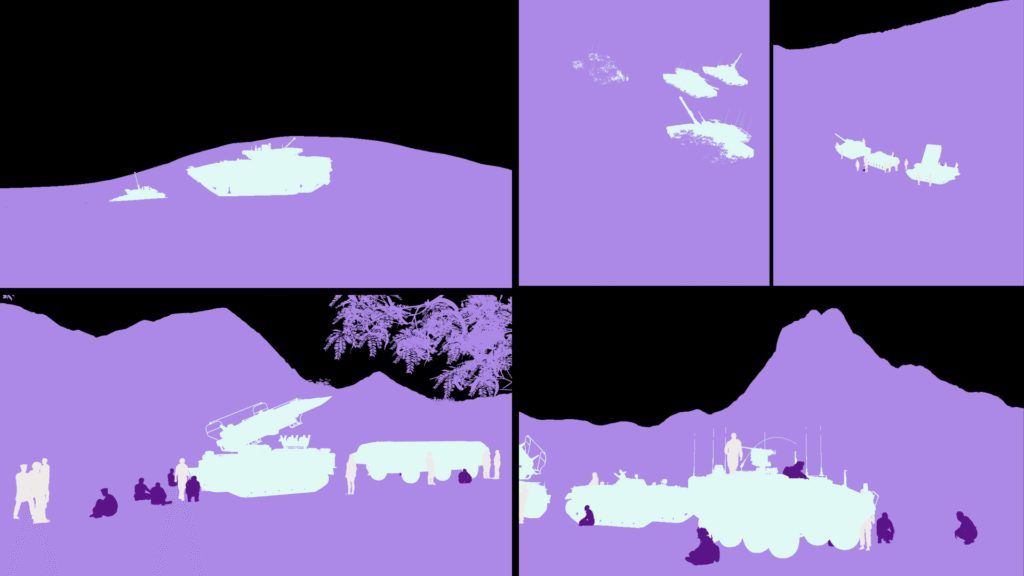
Class labels assign a category to an image or object - for example, vehicle, person, or drone. These labels form the basis for training classification models and object detectors.
Example of use cases:
- Object classification in aerial imagery
- Object filtering
- Scene recognition in reconnaissance
Note: class labels alone don’t show where objects are in the scene.
2. Instance Labels: Differentiating Between Multiple Objects
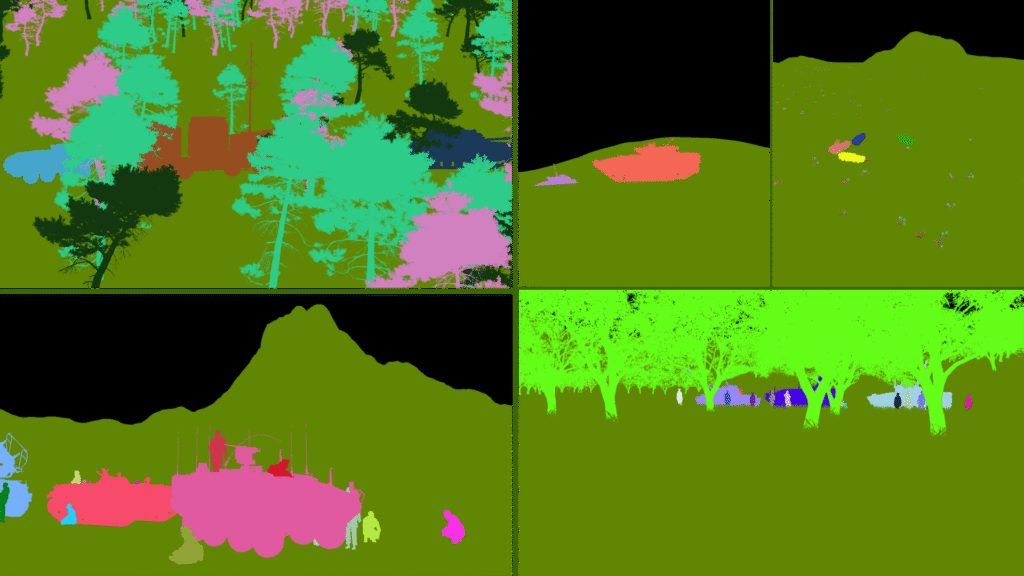
Instance labels tell apart individual objects of the same class. For example, labeling three separate vehicles in a convoy allows a model to track each one independently.
Example of use cases:
- Multi-object tracking
- Crowd monitoring
- Vehicle differentiation
Why it matters: When things are moving, treating each object separately improves tracking and behavior prediction.
3. 2D Bounding Boxes: Fast, Efficient Object Localization
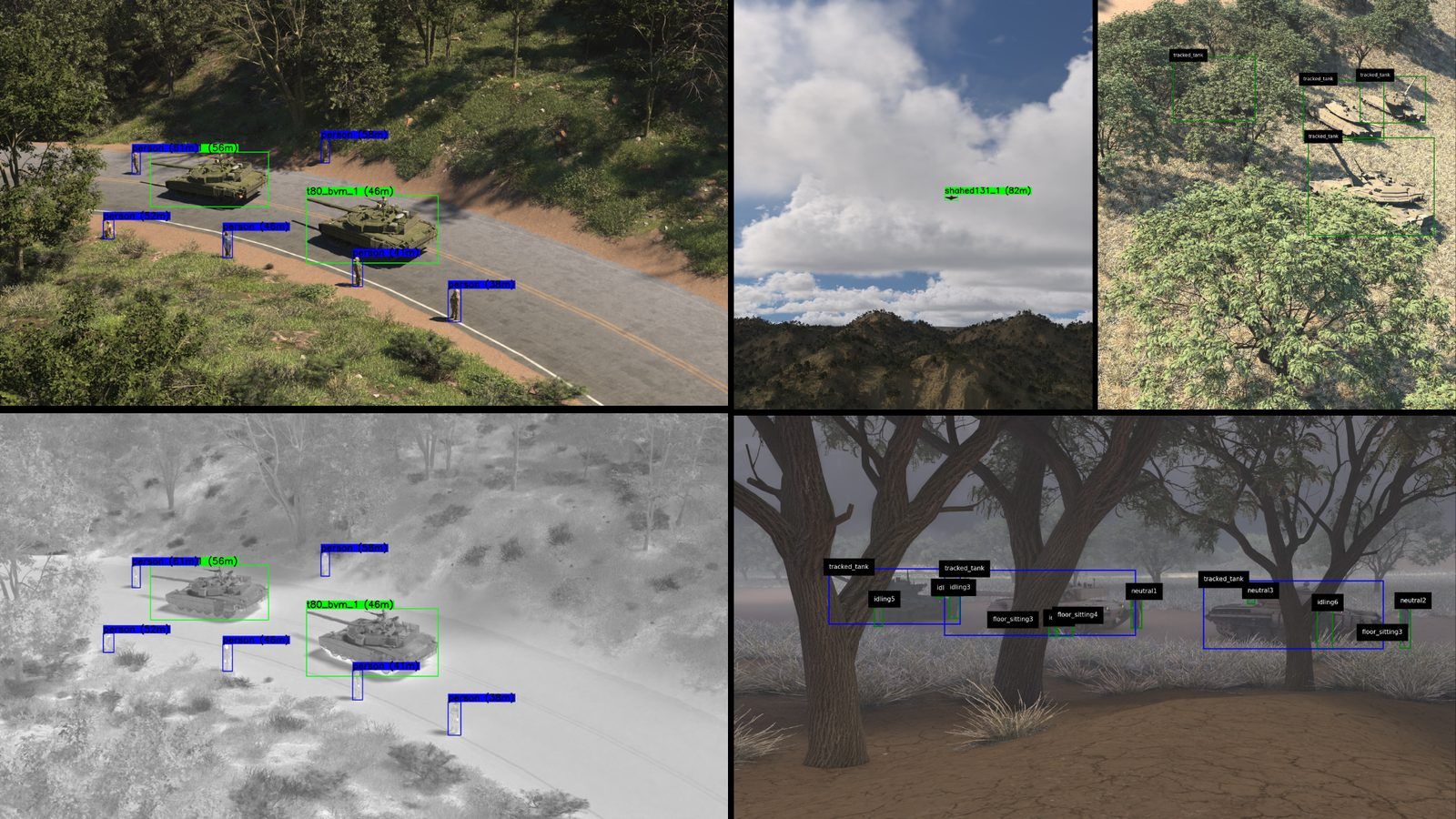
2D bounding boxes draw a rectangle around each object in the image. They are among the most common and efficient annotation types.
Example of use cases:
- Perimeter monitoring
- Drone-based object detection
- Real-time person or vehicle tracking
2D boxes involve a trade-off: they are fast to annotate and process, but they can include background clutter and fit irregular shapes poorly.
4. 3D Bounding Boxes: Adding Depth and Orientation
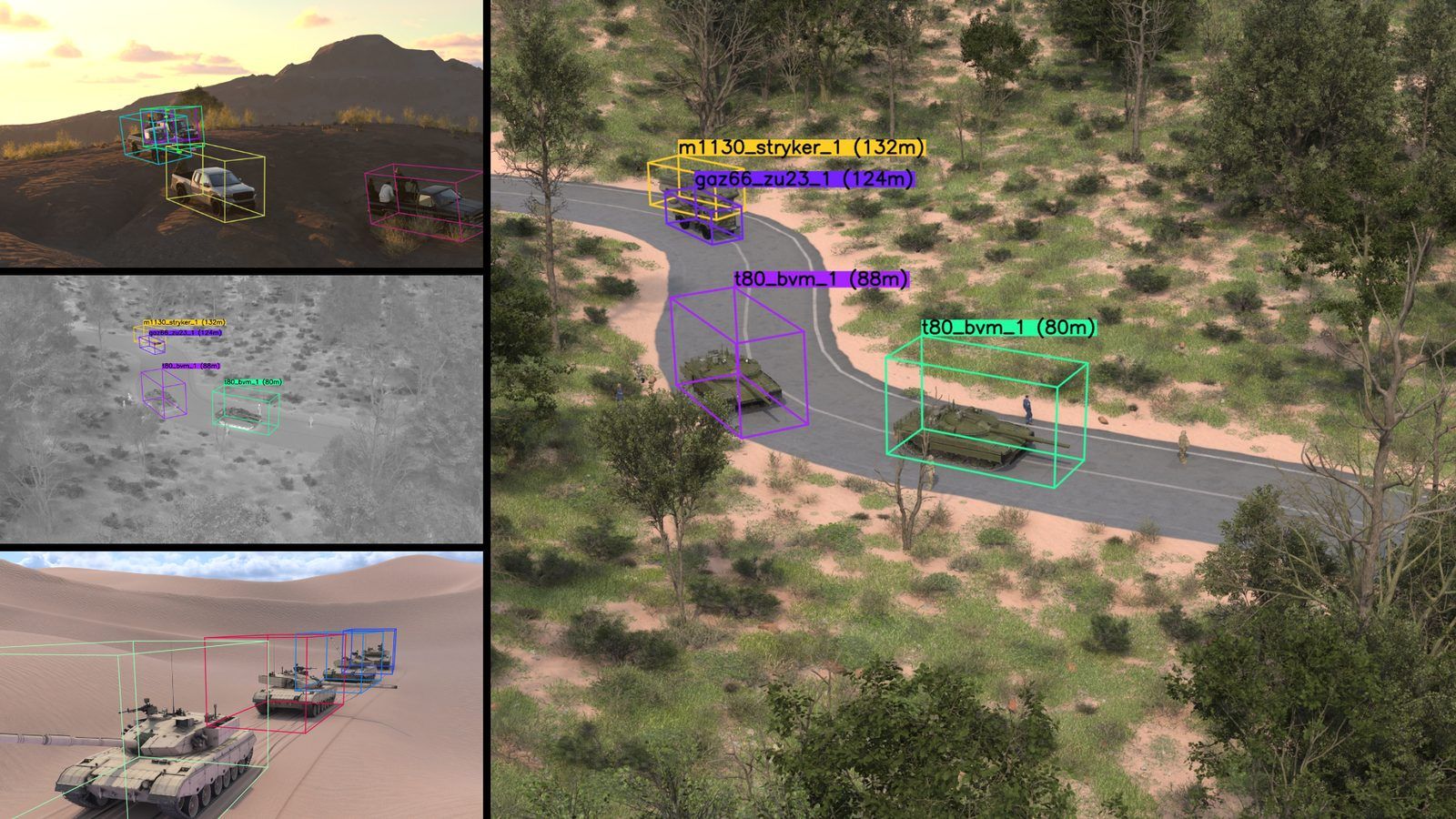
3D bounding boxes extend 2D boxes into three-dimensional space, capturing an object’s position, size, and orientation.
Example of use cases:
- Ground vehicle and UAV detection using multi-view sensors
- Path prediction for autonomous patrol units
- Object classification with spatial awareness
Challenge: accurate 3D boxes need calibrated sensors or synthetic environments; they can’t be drawn accurately by hand.
5. Depth Maps: Measuring Distance from the Sensor
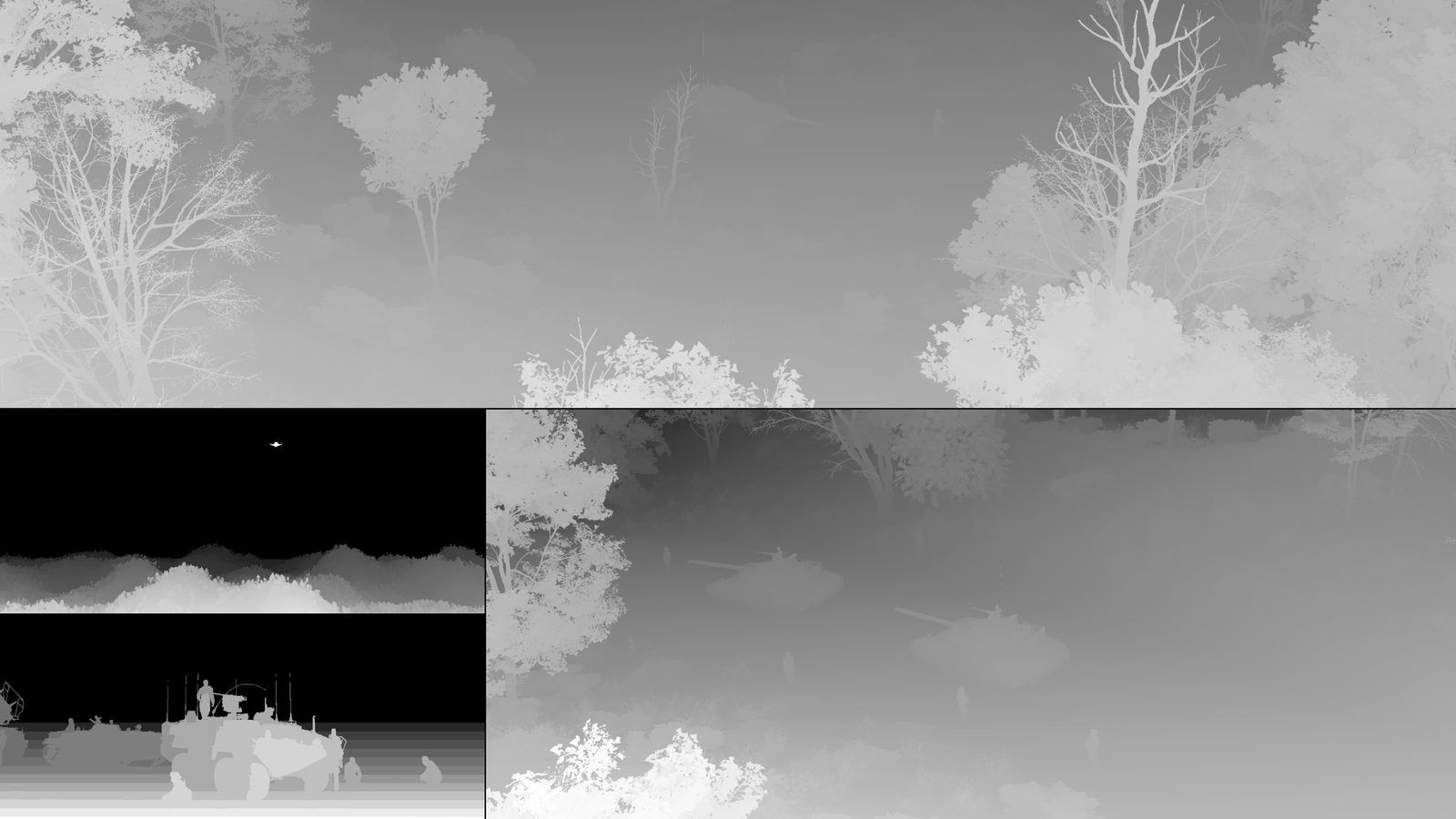
Depth maps give the distance from the sensor to the surface at every pixel, adding a third dimension to the image.
Example of use cases:
- Obstacle avoidance for unmanned systems
- Terrain analysis
- Tactical path planning
Data sources: depth maps usually come from Time-of-Flight sensors or LiDAR (Light Detection and Ranging).
6. Surface Normals: Understanding Object Geometry
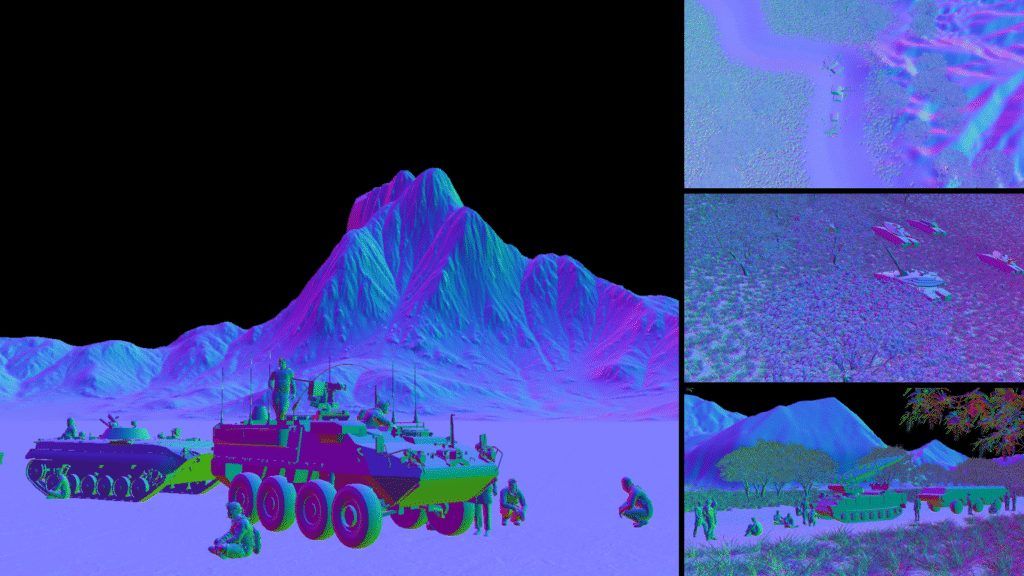
Surface normals record which way each surface faces in 3D, pixel by pixel.
Example of use cases:
- Grasp planning in robotics
- Scene understanding for indoor navigation
- Material and shape analysis in reconnaissance
Why it helps: normals add to depth information, so systems can interact with their surroundings more accurately.
7. Keypoints: Tracking Structure, Pose, and Movement
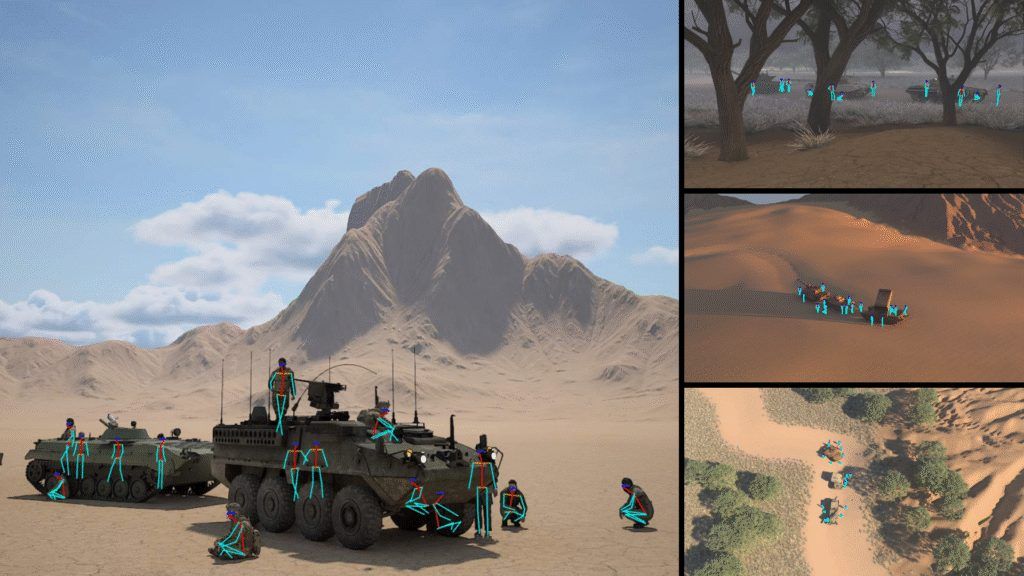
Keypoints mark specific, meaningful locations on an object - like a person’s joints or the corners of a drone.
- 2D keypoints sit in the flat image
- 3D keypoints include spatial depth for full pose estimation
Example of use cases:
- Human pose estimation in surveillance
- UAV or robot pose tracking
- Action recognition in security video analysis
Advantage: keypoints describe structure and movement in detail while staying lightweight.
8. Color Labels: Appearance-Level Semantics
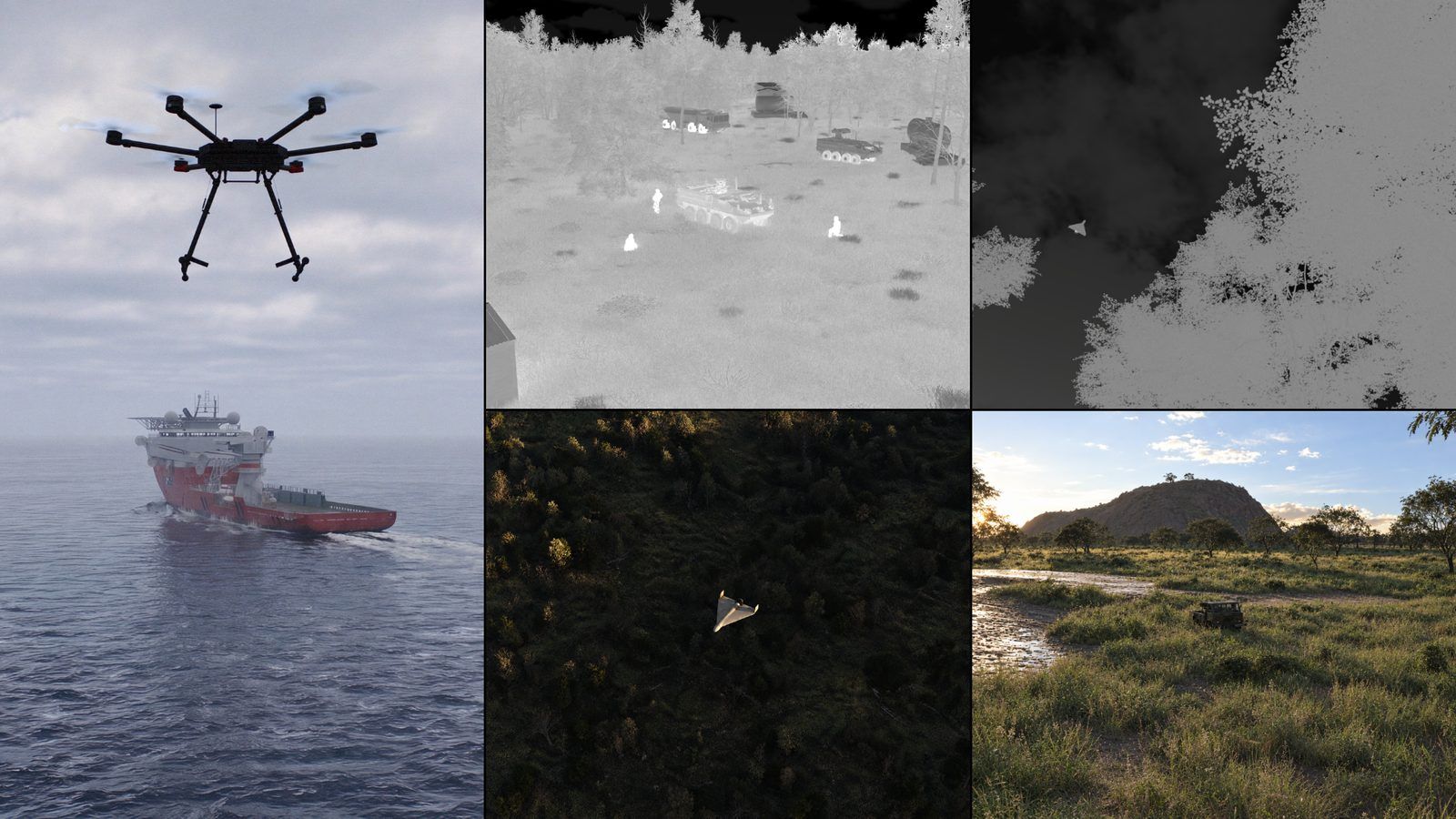
Color and material labels describe how things look, helping the model understand surfaces and contrast.
Example of use cases:
- Camouflage detection
- Synthetic data rendering
- Scene segmentation by material type (e.g., concrete vs. vegetation)
Note: clear, consistent rules for color labels, careful quality checks, and attention to bias help your models learn useful visual features and carry over to real-world data.
Matching Annotation Types to Operational Needs
Not every project needs every annotation type. For example:
- A fixed surveillance system may need only class labels and 2D bounding boxes.
- An autonomous UGV navigating hostile terrain may need depth maps, surface normals, and 3D boxes.
- A drone-based reconnaissance platform benefits from 3D keypoints for identifying and tracking moving targets.
The annotation mix you choose shapes model performance, efficiency, and how well deployment goes.
Final Thoughts
In high-stakes settings, computer vision models must understand what they see, not just see it. That starts with the right annotations. In defence and security, where access to diverse, annotated data can be limited or classified, synthetic data fills the gap. Synthetic environments generate many kinds of annotation - including depth, normals, and 3D pose - at scale, with full control over lighting, weather, and hidden objects. Synthetic data keeps labels consistent, cuts annotation effort, covers edge cases, and allows fast iteration - all without risking security or compliance.