Computer vision engineers, researchers, and AI practitioners build models for autonomous systems, surveillance, and industrial inspection, and they want near-perfect accuracy once those models are deployed. Rare scenes, such as hidden objects, low light, or unusual angles, make models fail even when they score well on benchmarks. The data needed to handle these edge cases is often scarce, expensive, or risky to collect for privacy reasons.
Fight Edge Cases in Computer Vision with Synthetic Images
What if your top-performing YOLO model crumbles when an object is behind a tree at dusk? Edge cases, the rare and unpredictable events, sink 30-50% of computer vision models in production: the models do well in controlled tests and then fail in the real world.
Why Edge Cases Break Computer Vision Models
Real-world datasets cover common scenes well but leave large gaps, such as vehicles in fog or partly hidden objects seen from odd angles. Collecting this data means sending objects and actors into the field at great cost, then waiting for the right weather and light. Then comes slow, error-prone manual labeling, plus privacy problems under rules like GDPR, especially in defence or surveillance. Models trained this way can overfit to the biases in their data and produce false positives and false negatives when it matters most.
Procedural Synthetic Images: The Solution
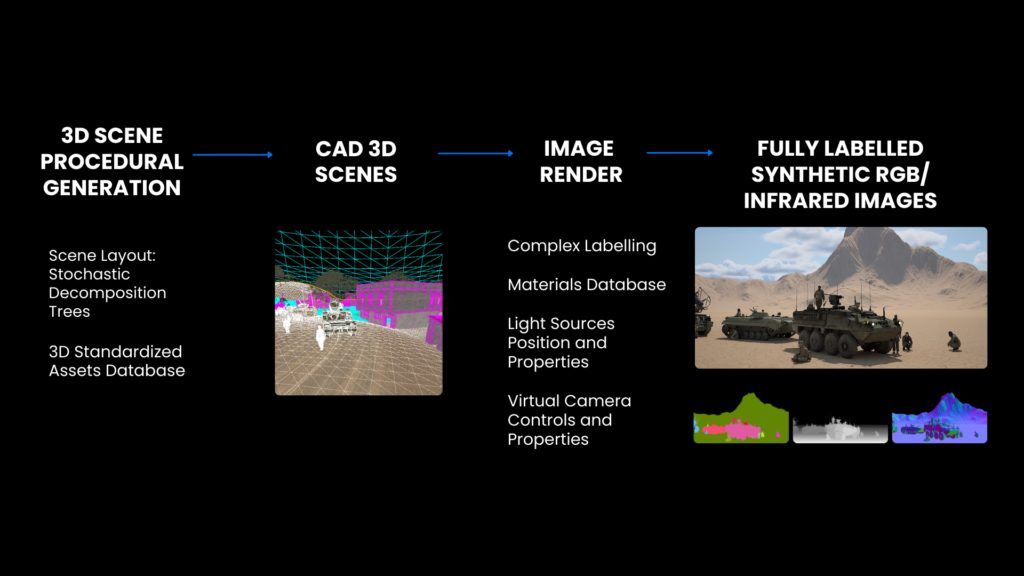
Procedural synthetic data fills the gaps in real-world imagery. Procedural engines generate large volumes of images with precise control over lighting, weather, hidden objects, camera angles, and sensor settings. The images also come with pixel-perfect labels such as 2D and 3D bounding boxes, segmentation masks, and depth maps. Generative AI images can open a gap between training and real data; procedural generation instead lets you design specific failure modes and test how well a model generalizes under controlled conditions.
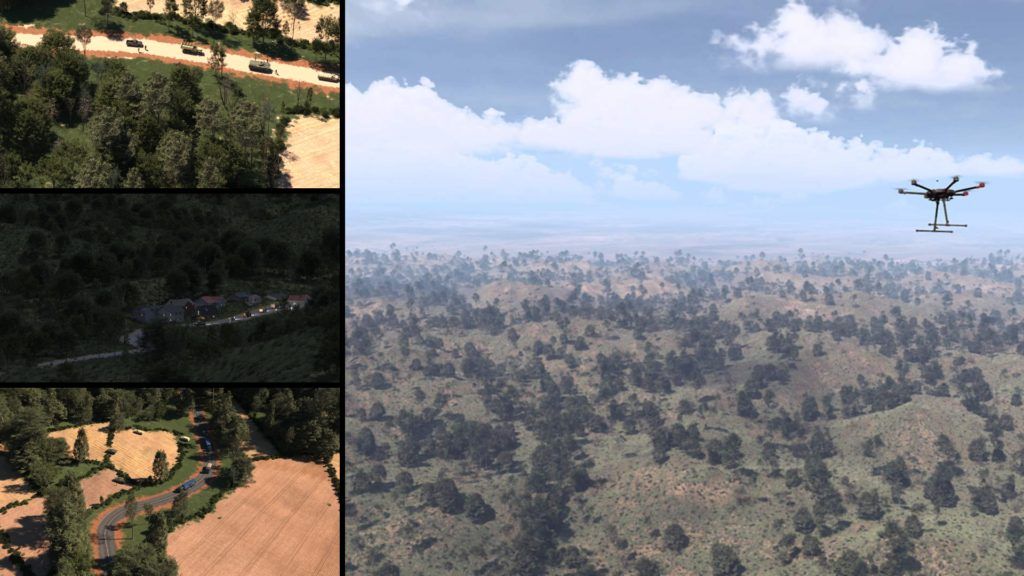
This works in practice. A drone interceptor maker retrained its model on 15,000 synthetic thermal images of drones seen from the ground at altitudes up to 125m, and detection precision rose by about 23%. The synthetic thermal data also raised detection recall and closed the gap to real data faster, so the team could iterate and deploy sooner.
Proven Workflow for CV Engineers
For computer vision engineers, this means a more methodical workflow:
- Identify failure modes through error analysis on real data.
- Generate thousands of matching images overnight with a procedural tool such as the AI Verse Procedural Engine.
- Retrain and validate, then repeat.
In practice, this can cut annotation effort and data-collection costs by 80% and make models more robust to motion blur, sensor noise, and other artifacts. Models handle conditions they never saw in training without endless relabeling. And because the data is synthetic, it raises no privacy concerns, which matters most in sensitive fields.
Synthetic Data Trends in Computer Vision
More computer vision teams are adopting synthetic data, and forecasts suggest a growing share of training data will be synthetic by the late 2020s. As models grow more complex and privacy rules tighten, procedural and generative synthetic-data tools will likely become a standard part of the development pipeline, especially for safety‑critical applications such as autonomy and industrial inspection.
The Future Synthetic Landscape
A growing share of CV models will rely on synthetic data to handle multiple sensor types, driven by regulation and growing complexity. Procedural engines like GAIA will become a standard part of AI development and make model training safer. Real data will likely play a supporting role rather than the lead.