
AI Verse and Scaleout Partner to Strengthen End-to-End AI Capability for Tactical Edge Operations
Paris/ Stockholm, June 14, 2026.
AI Verse, the French procedural synthetic data platform, and Scaleout, the Swedish sovereign edge AI company today announced a strategic partnership to jointly develop end-to-end machine learning capability for computer vision at the tactical edge.
Under the Memorandum of Understanding, the two companies are cooperating on developing AI for defence. AI Verse’s procedural synthetic data generation platform, GAIA, removes the single biggest barrier to edge computer vision, training data, by generating it on demand at scale. Scaleout’s Edge AI Platform then uses that data to train AI models that are later deployed at the tactical edge. GAIA-generated synthetic RGB and IR imagery with pixel-perfect labels serves as a foundation for computer vision models covering ground-to-air and air-to-ground detection scenarios. These models ship with Scaleout’s Edge AI Platform from day one and adapt to each site thereafter. They then feed the active learning and federated fine-tuning pipeline that Scaleout deploys with defence customers, enabling ongoing improvement on operational data that never leaves the site.
The partnership addresses a persistent challenge in defence AI: armed forces cannot centralise the operational sensor data that would most improve their models, yet field collection alone cannot produce the volume and diversity of labelled imagery that robust detection requires. GAIA generates photorealistic, fully annotated training data on demand, across any environment, sensor type, or threat class. No restricted operational footage. No manual labelling. No waiting on field collection. Scaleout trains its models on this synthetic data, then takes them to the edge, where they keep learning from live data under sovereign, air-gapped conditions.
The integrated capability sits at the core of Scaleout’s Tactical Computer Vision Network, an iteratively enhancing, sovereign computer vision capability for ISR and counter-UAS that combines Vision Ground Nodes deployed at operational sites with federated learning across the network. AI Verse’s GAIA engine supplies the foundation: synthetic, fully annotated RGB and IR imagery that train highly accurate models for aerial and ground-based scenarios, before real-world data is available, solving the cold-start problem outright. Together, the two companies deliver operationally adapted computer vision without centralising sensitive data at any point.
“AI at the tactical edge lives or dies on data. The algorithms are the easy part; the hard part is generating, deploying, and continuously improving models under real operational constraints. Our partnership with Scaleout combines two critical capabilities: procedurally generated synthetic data that solves the defence data bottleneck, and sovereign edge infrastructure that enables learning where the data is created. Together, we provide armed forces with a practical path to deploy adaptive computer vision systems faster, while preserving security, sovereignty, and operational control.” Benoit Morisset, CEO, AI Verse
“Every new deployment we do hits the same friction point: the platform’s core value—intelligent data selection, assisted annotation, continuous model improvement—only becomes visible once there is a working detection model to build on. Until now that has meant weeks or months before a customer sees real detections on their own sensor feeds. With AI Verse we can ship models for counter-UAS and ISR scenarios as part of the platform from day one. Our platform takes it from there, continuously adapting those models to each site’s environment without raw data ever leaving the edge. That full pipeline is what defence programmes need, and it is what this partnership makes possible.” Andreas Hellander, CEO, Scaleout
About AI Verse
AI Verse is a French deep tech company solving the defence data bottleneck with procedurally generated synthetic data. Its GAIA engine generates photorealistic, fully annotated training datasets for defence, security, and robotics applications. 20 seconds per image. 8 annotation types. Zero manual labelling. GAIA covers scenarios that are impossible or impractical to capture in the field: infrared, adverse conditions, rare threat classes, edge cases at scale. AI Verse was selected as a NATO DIANA Innovator in 2025, chosen from 3,000+ applicants. Ask For Your Synthetic Data Demo: www.ai-verse.com/contact
About Scaleout
Scaleout is a Swedish deep tech company founded in 2018, originating from advanced research at Uppsala University. The company’s Scaleout Edge platform enables federated learning across distributed edge fleets on drones, vehicles, and sensors, with raw data remaining on-device at all times. Customers and partners include BAE Systems Bofors, Saab, FMV, Scania, BMW, and Oracle. Scaleout was selected as a NATO DIANA Innovator in 2025. Learn more about the Tactical Computer Vision Network: scaleoutsystems.com/tactical-cv-network.
Press Contact
AI Verse: Aleksandra Kiesiak — contact@ai-verse.com
Scaleout: Jens Frid — jens@scaleoutsystems.com

How to Evaluate a Synthetic Image Dataset Specification for Training a High-Performance Computer Vision Model
In the domain of computer vision, the dataset’s relevance, quality, and diversity are key drivers in achieving high accuracy and reliable performance. A well-specified synthetic dataset doesn’t just enable effective model training; it sets the foundation for the model’s success in challenging, real-world scenarios. This guide outlines seven essential pillars for evaluating synthetic datasets: relevance […]
How Automated Annotation with Synthetic Data Elevates Model Training in Computer Vision
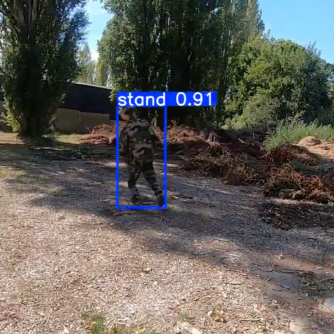
Automated annotation is the process of generating ground truth labels for training data — bounding boxes, segmentation masks, keypoints — without manual human input. With synthetic images, every annotation is produced automatically at the moment of image creation, making it possible to build fully labeled datasets at machine speed and unlimited scale. What is automated […]
Why Defense CV Teams Can Never Collect Enough Training Data
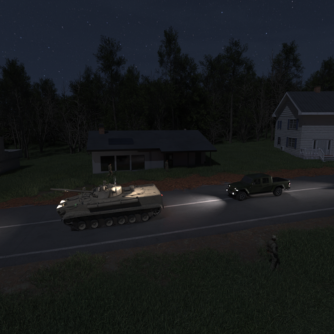
Defense and drone CV engineers face a persistent issue: field-collected data falls short for robust models, leaving gaps in edge cases like rare weather or occluded targets. No amount of flights or ground tests delivers the volume, diversity, or labels needed for mission-ready detection. Synthetic data addresses this directly by generating precise, scalable datasets that […]