
Synthetic images
for Computer Vision
What Are Synthetic Images?
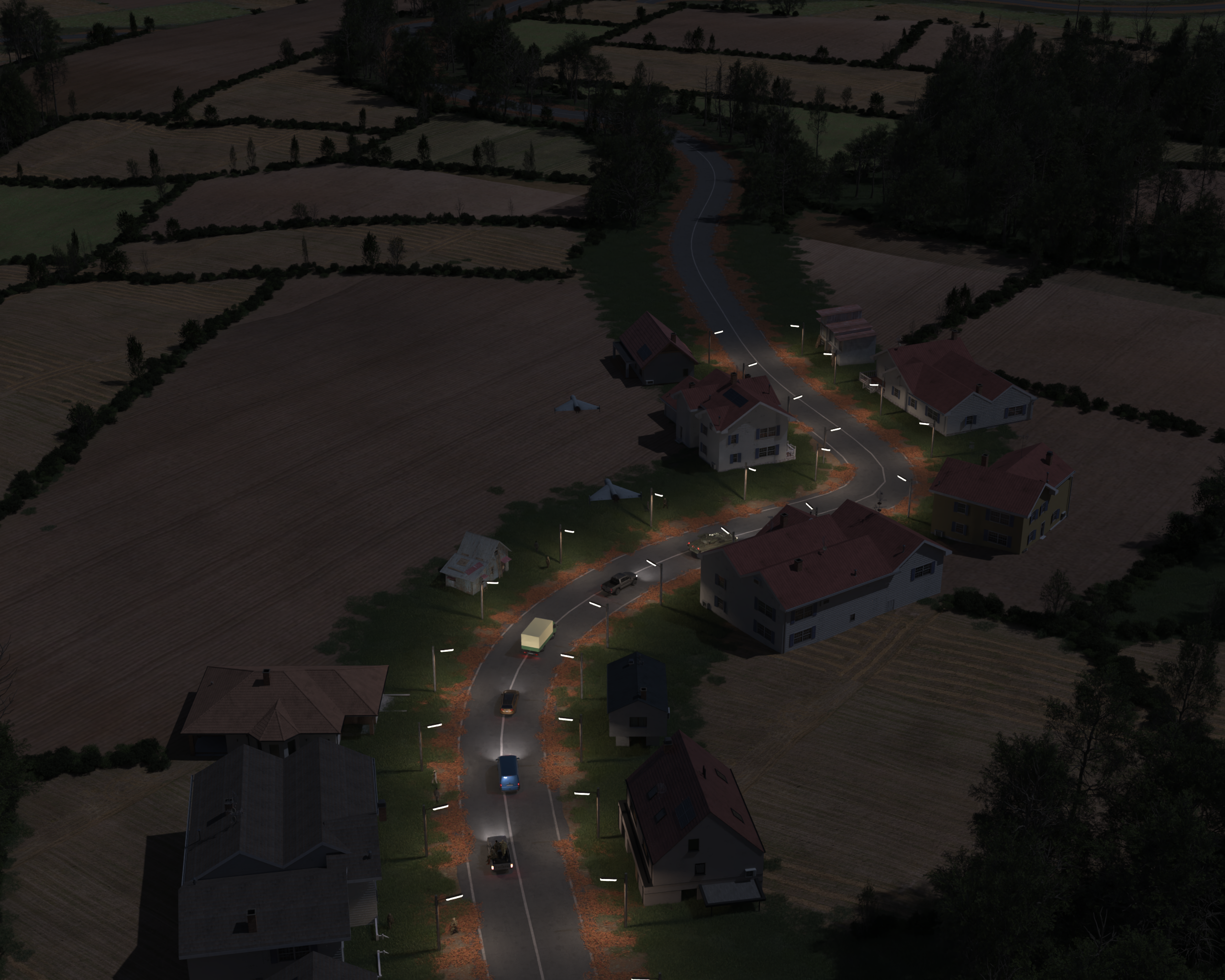
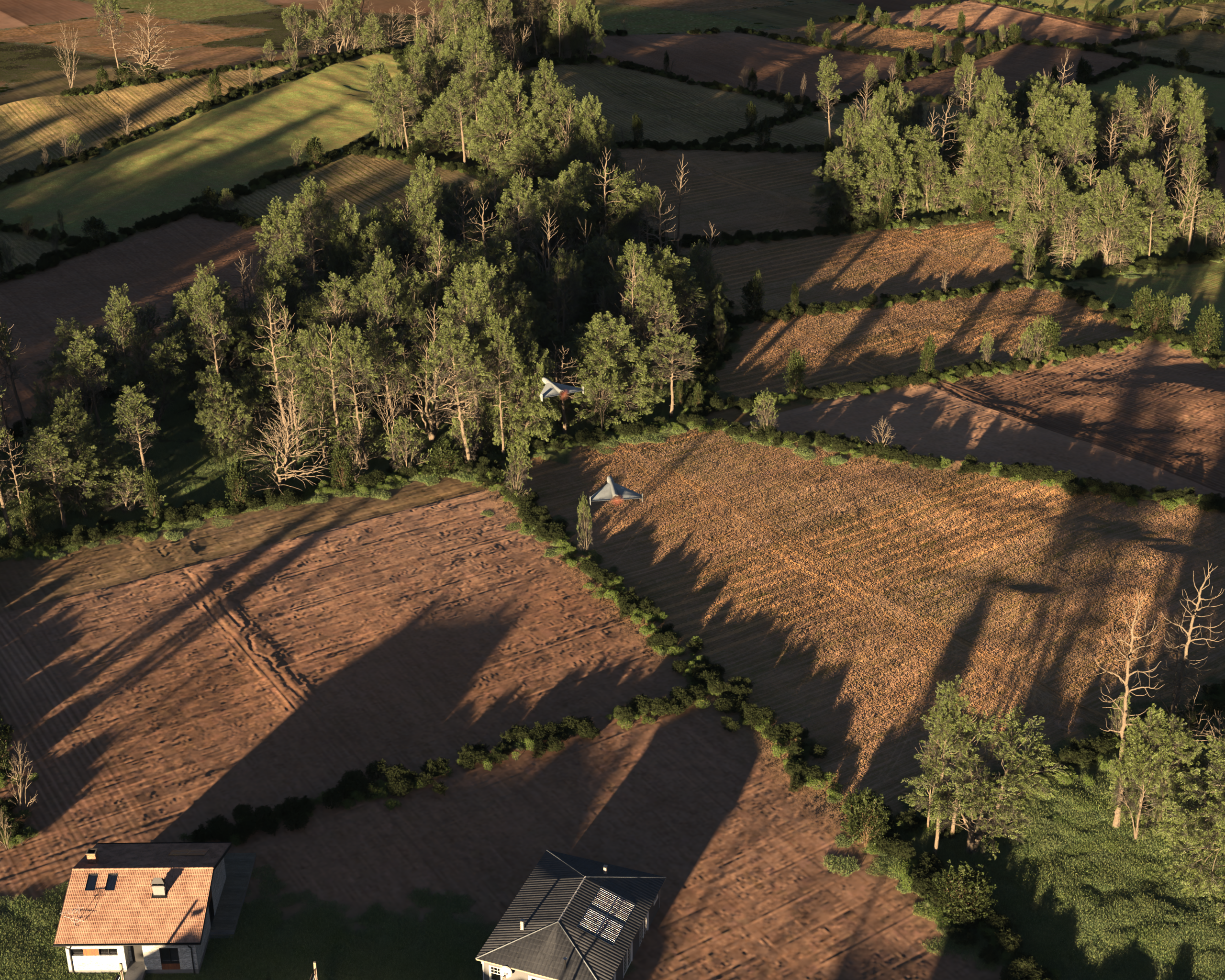
Understanding why synthetic images have become the preferred data source for computer vision starts with their definition. Specifically, they are artificially generated visuals created using techniques such as 3D rendering, generative adversarial networks (GANs), and procedural modeling. Furthermore, these images provide an unlimited source of structured, high-quality data for AI training. As a result, developers can simulate diverse conditions, rare events, and complex environments, without the constraints of real-world data collection.
Why Synthetic Images?
The Strategic Case for AI Training Data
Synthetic images are artificially generated visuals produced through 3D rendering, procedural generation, and generative AI, that serve as training data for computer vision models. Increasingly, the question teams ask is: why synthetic images rather than real-world data collection? The answer lies in five fundamental advantages: unlimited scale, perfect annotation accuracy, zero privacy risk, full scene control, and a fraction of the cost. In particular, AI Verse synthetic images are generated by a proprietary Procedural Engine that produces fully-labelled, pixel-perfect datasets on demand. As a result, teams building detection models for defence, security, smart home, and industrial applications use AI Verse to compress data pipeline timelines from months to hours.
Why Synthetic Images Outperform Real-World Data
Collecting and labelling real-world images is slow, expensive, and limited. Synthetic images remove every one of these constraints:
- Cost: Real image annotation costs $3–$10 per image. AI Verse synthetic images cost a fraction of that.
- Speed: A real-world dataset that takes 84 days to collect and annotate can be replaced by an equivalent synthetic dataset in under 24 hours.
- Coverage: Rare events (equipment failures, edge-case scenarios, dangerous environments) are impossible or unethical to capture in the real world. Synthetic images can simulate any condition on demand.
- Accuracy: Human annotation is error-prone, with inter-annotator disagreement rates of 5–15%. Synthetic annotation is programmatically generated and 100% consistent.
- Privacy: Synthetic images contain no personally identifiable information (PII) and are GDPR– and CCPA-compliant by design.

Procedural engine
Conventional datasets often suffer from biases, privacy concerns, and costly acquisition. In contrast, our synthetic images offer a pixel-perfect alternative. They are fully customizable and free from inherent bias or privacy issues.
AI Verse Procedural Engines empowers you with full control over scene parameters, ensuring you can fine-tune the environments for unlimited image generation, giving you an edge in the competitive landscape of computer vision development

3D SCENE PROCEDURAL GENERATION
Scene Layout: Stochastic
Decomposition Trees
3D Standardized Assets Database


3D SCENE
IMAGE
RENDER
Complex Labelling
Materials Database
Light Sources
Virtual Camera Controls and Properties

Fully Labeled Image Datasets
Benefits of Synthetic Images for Computer Vision
1.
Cost Efficiency
Gathering real-world data requires extensive resources, from setting up cameras and environments to manually labeling images. Synthetic data automates this process, cutting costs and development time.
2.
Better Data Quality & Annotation Accuracy
Unlike human-annotated datasets prone to inconsistencies, synthetic images come with precise, programmatically generated labels, enhancing model performance
3.
Diversity & Bias Reduction
Control over lighting, perspective, object placements, and backgrounds ensures that models train on diverse conditions, leading to superior generalization.
4.
Privacy & Compliance
Synthetic images contain no personally identifiable information. They cannot be reverse-engineered to extract sensitive details, making it a safer option for AI applications.
5.
Faster go-to-Market
AI teams can rapidly generate and modify datasets to refine model performance, significantly reducing development cycles, providing a competitive edge in the market.
6.
Scalable and Secure Solutions
With AI Verse’s Procedural Engine, you gain full control, ensuring scalability. Consequently, AI Verse generates synthetic images on demand whenever you need them.
Real-World Applications of Synthetic Images
Human Detection
Military Vehicle Detection
Weapon Detection
Drone Detection
Fall Detection
Abandoned
Luggage Detection
Frequently Asked Questions: Why Synthetic Images for AI
What are synthetic images in AI?
Synthetic images in AI are artificially created visuals used to train, validate, and test machine learning models; particularly computer vision systems. Specifically, they are generated using 3D rendering engines, generative adversarial networks (GANs), diffusion models, or procedural generation pipelines. Unlike photographs, synthetic images come with automatic, pixel-accurate labels for every object, thus eliminating the need for manual annotation. Furthermore, AI Verse generates synthetic images using a proprietary Procedural Engine that supports randomised scene layouts, lighting conditions, camera angles, and object placements.
Are synthetic images as good as real images for training AI?
Yes, when generated with sufficient diversity and realism. Research from NVIDIA, Oxford University, and MIT confirms this. Moreover, models trained on high-quality synthetic data match the performance of real-data-trained models on object detection benchmarks. AI Verse synthetic images draw from a standardised 3D asset database. Materials, lighting, and camera properties are all randomised. As a result, this ensures the visual diversity needed for robust generalisation.
Why use synthetic images instead of real data?
Synthetic images are preferred over real-world data in several situations: when real data is too costly or time-consuming to collect; when rare or dangerous scenarios need to be simulated; when privacy regulations prevent the use of real footage; or when large volumes of labelled data are needed quickly. In addition, annotation accuracy must be near-perfect for many applications — a requirement that synthetic data meets by design. Indeed, studies show that models trained on diverse synthetic datasets can achieve comparable or superior accuracy to those trained on real data, particularly when domain randomisation techniques are applied.
What Pixel-Perfect Labels Are Included in AI Verse's Synthetic Image Generation Engine?
There are 8 pixel-perfect labels included: Classes, Instances, Depth, Normals, 2D/3D Bounding Boxes, 2D/3D Keypoints, Skeletons, and Color.
How Does AI Verse Generate Synthetic Data for AI Model Training?
AI Verse Platform: Generation & Labelling
Overall, AI Verse uses a multi-stage Procedural Engine pipeline:
(1) Stochastic scene layout decomposition selects and arranges 3D assets from a standardised database;
(2) the 3D scene is rendered with randomised lighting, materials, and virtual camera configurations;
(3) each rendered image is automatically annotated with bounding boxes, semantic masks, depth maps, and instance segmentation labels.
Users select the desired parameters for the environment, scenes, objects, activities, lighting, and more. Based on these criteria, the engine can generate an unlimited number of diverse, varied images ready for AI model training. The result is a fully-labelled synthetic image dataset ready for immediate use in model training.
How Accurate Are the Labels in AI Verse's Synthetic AI Datasets?
Yes, our automated system ensures that each generated image contains 8 pixel-perfect labels. Therefore, the risk of inaccuracies is minimal and the highest level of quality is guaranteed.
What Is The Difference Between AI Verse Synthetic Image Data and GenAI Images?
Our proprietary procedural technology generates images based on human input. Users select various criteria for the image from a menu in a step-by-step process, rather than typing a prompt into a GenAI tool. This approach minimizes mistakes and ensures the highest possible realism in our images.
How fast do you generate images?
It takes 4s to generate one labelled image on 1 GPU. Generation can be spread across several GPUs (max 10).
How AI Verse Solves The Domain Gap Problem in Synthetic Data?
Domain Gap, Speed & Model Performance
The most common objection to synthetic training data is the domain gap: the performance drop that occurs when a model trained on synthetic imagery is deployed against real-world sensor data. For a long time, this objection was valid. Game-engine or GAN-generated images lacked the physical accuracy that defense and industrial CV applications demand.
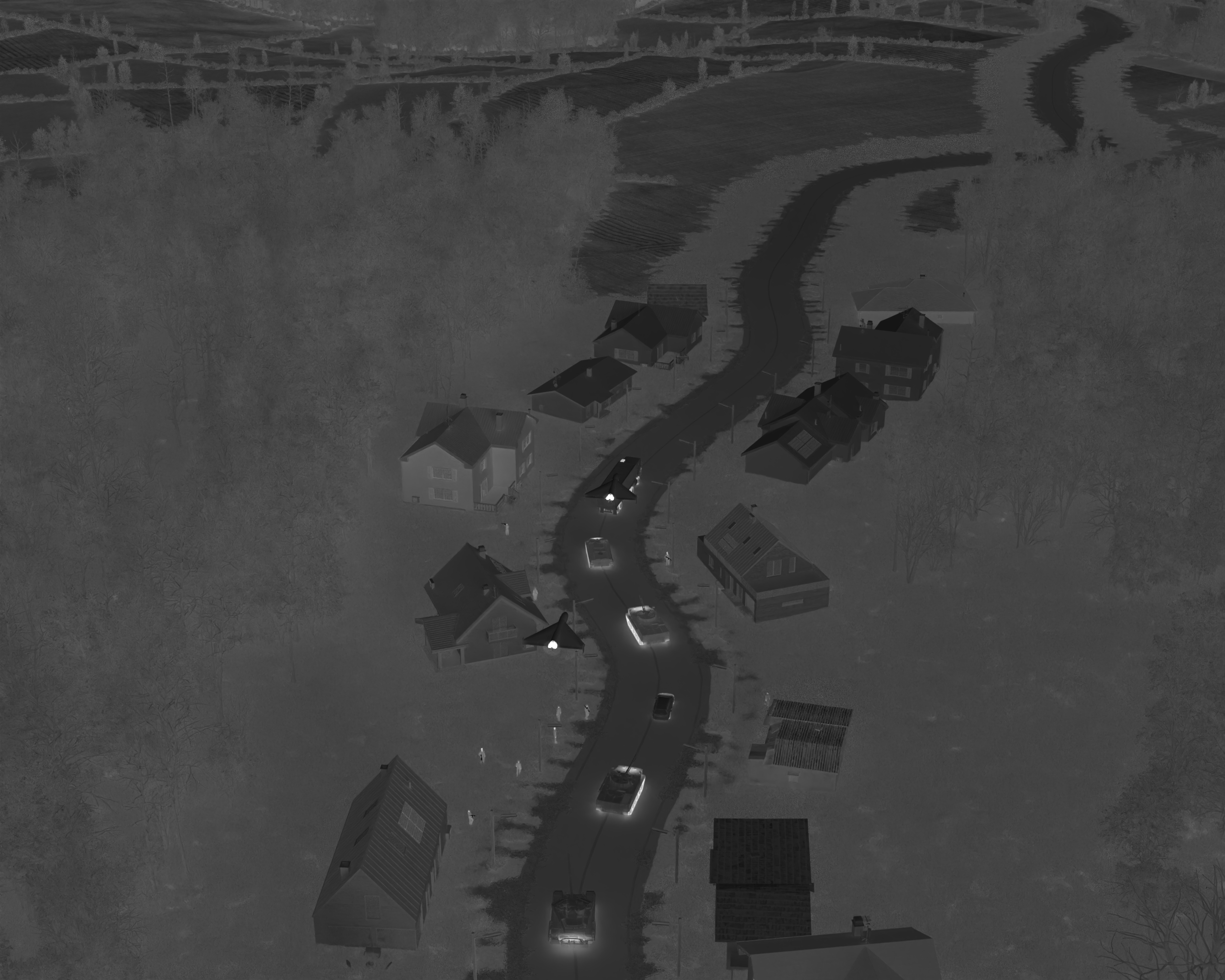
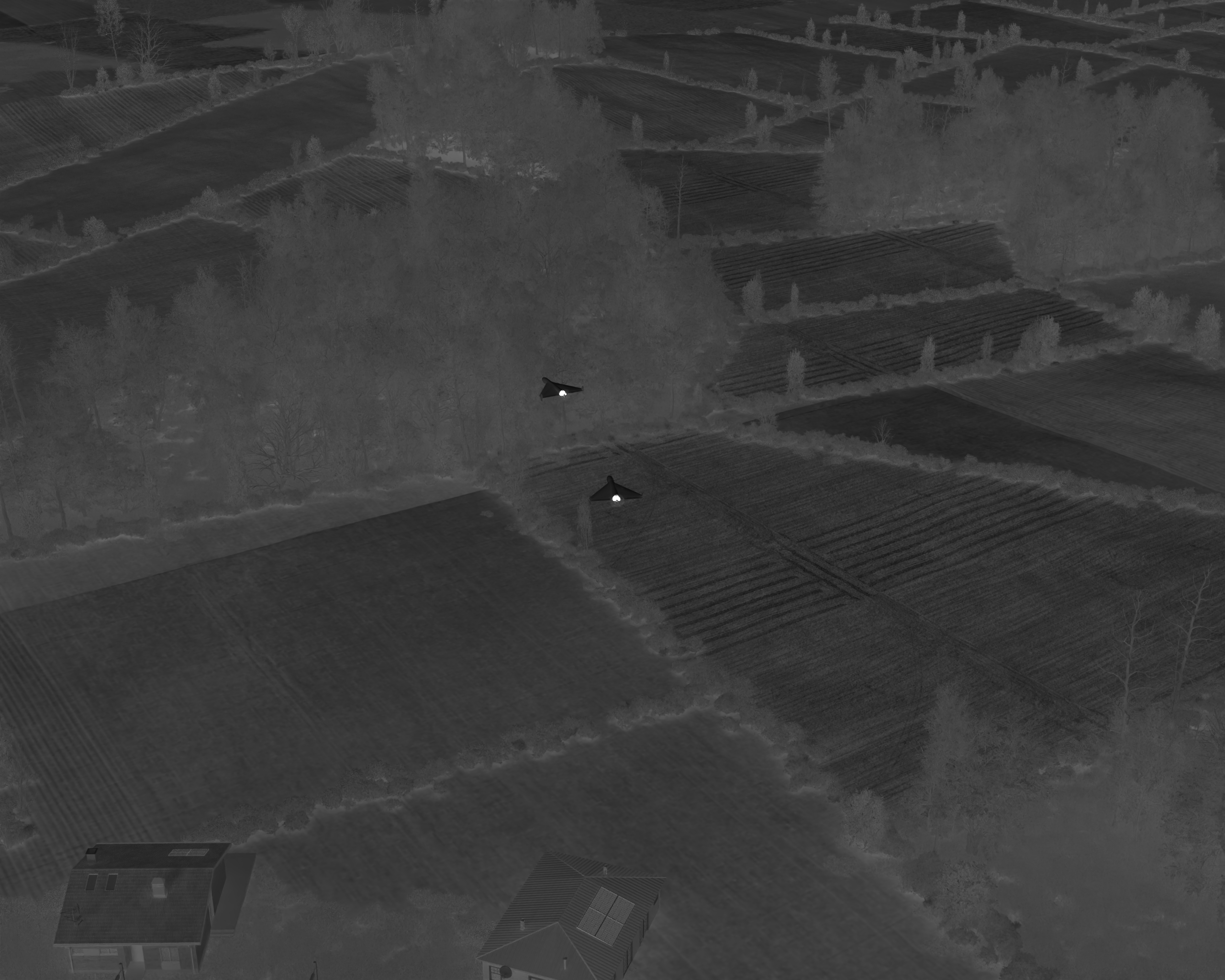
AI Verse addresses the domain gap through physics-based rendering. Rather than approximating how light and objects appear, the AI Verse procedural engine simulates actual sensor physics: infrared thermal signatures, lens distortion profiles, motion blur at specific shutter speeds, atmospheric scattering across operational distance ranges, and surface material reflectance. The output imagery is not a stylized approximation of reality, but it is a physically accurate simulation of what a specific sensor would capture in a specific environment.
The second mechanism is procedural variation. Every generated dataset draws from a continuous space of randomized scene parameters: object positioning, lighting angle, weather condition, background clutter, and viewpoint. This prevents the overfitting that occurs when synthetic datasets use fixed templates. Models trained on AI Verse data generalize because they have been exposed to the full distribution of conditions they will encounter in deployment, not a curated sample of them.
What types of AI models benefit most from synthetic images?
Computer vision models, especially object detection, semantic segmentation, and pose estimation models, benefit most from synthetic training data. Key use cases include: autonomous vehicles (pedestrian, vehicle, and obstacle detection), security and surveillance (weapon, drone, and abandoned luggage detection), defence (military vehicle and drone detection) and smart home (fall detection, human presence detection).
Is synthetic training data GDPR-compliant?
Compliance, Use Cases & Further Questions
Yes. Synthetic images generated by AI Verse contain no real-world personally identifiable information (PII). Because no real people, vehicles, or locations are captured, synthetic datasets are exempt from GDPR, CCPA, and HIPAA restrictions on personal data. This makes them the safest option for organisations operating in regulated industries such as healthcare, finance, and law enforcement.
What is the difference between synthetic images and augmented data?
Data augmentation applies transformations (flipping, cropping, brightness adjustment) to existing real images to artificially expand a dataset. Synthetic image generation creates entirely new images from scratch using (in case of AI Verse Procedural Engines) 3D rendering or generative models. Synthetic generation provides significantly greater diversity, including novel viewpoints, rare object configurations, and unseen environments, compared to augmentation alone. AI Verse recommends using synthetic images as the primary training source and augmentation as a secondary technique.
How many synthetic images are needed to train a computer vision model?
The number of synthetic images required depends on the complexity of the detection task and the number of target classes. As a rule of thumb, a single-class object detector typically requires 5,000–15,000 labelled images per class to achieve acceptable performance. AI Verse’s Procedural Engine can generate this volume in hours. For multi-class detection tasks, AI Verse recommends starting with 10,000–50,000 images and iterating based on validation performance.