
AI Verse and Soloma Avionics are Finalists for DAIC Partnership of the Year Award
Recognizing joint innovation in thermal UAV detection for frontline defense
When AI Verse and Soloma Avionics began working together, our shared goal was clear: improve thermal detection performance where it matters most – saving lives in Ukraine.
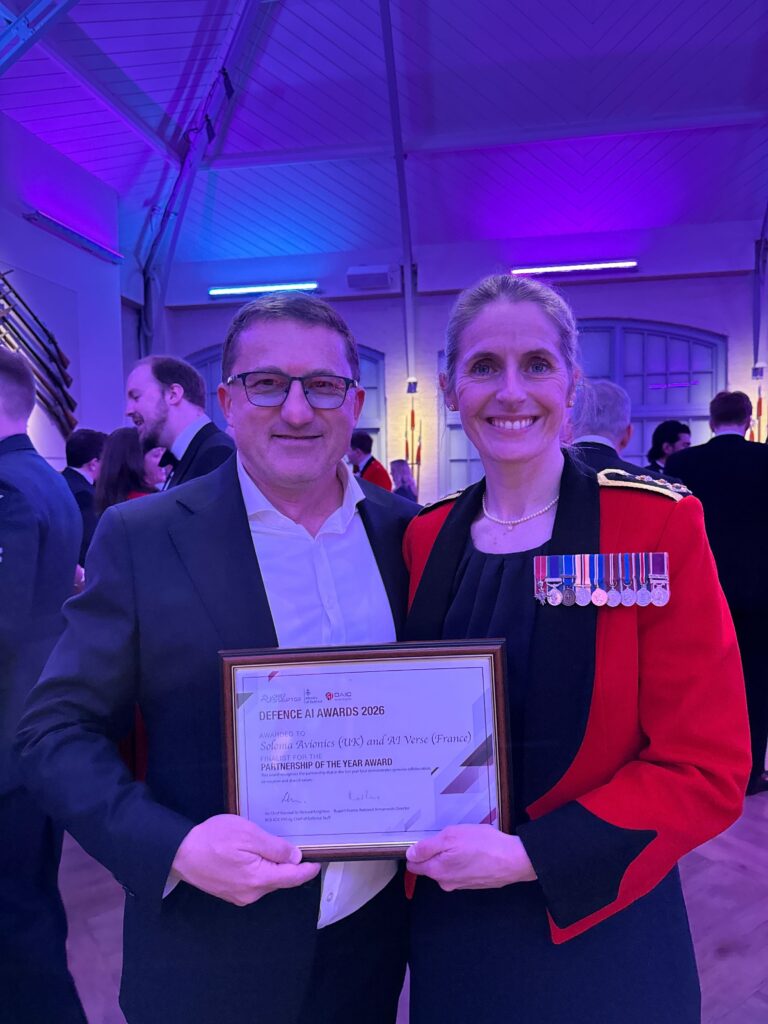
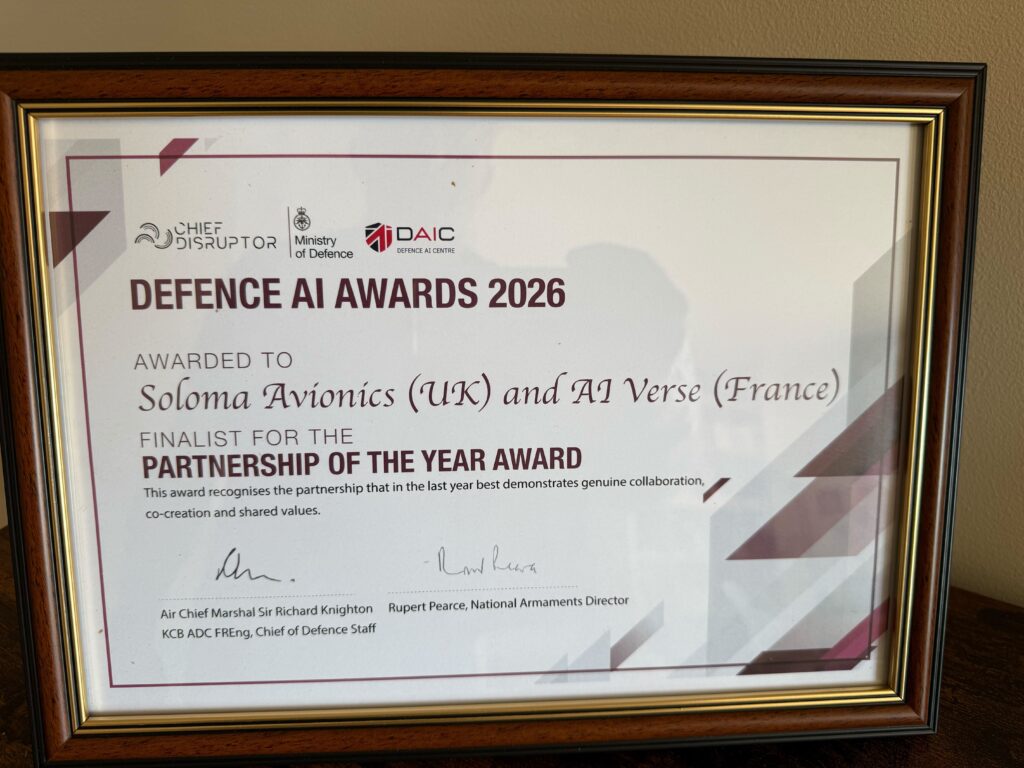
Our partnership has now been recognized by the Defence AI Council as the Finalists for Partnership of the Year award. It honors projects that show measurable operational impact through effective collaboration between AI developers and defense technology companies.
Why Detection Matters
Shahed drones are a persistent and lethal threat. With thousands launched every month, detecting them early, especially under low‑contrast night‑time conditions, is essential.
Soloma’s existing detection system had solid benchmark scores but struggled against the unpredictable conditions of the field. To strengthen it, AI Verse used our procedural synthetic data engine to generate an infrared dataset that mirrored real mission environments.
The Synthetic Edge
By fine‑tuning Soloma’s models with our synthetic infrared Shahed‑136 dataset, the team achieved:
- Detection recall boosts from 9.4% to 51%, later stabilizing at 42% in field conditions
- Zero false positives
- 100% detection precision
- 1.13 s faster first detections, giving operators up to 23 m more response distance
These improvements mean earlier awareness, faster reaction, and reduced operator fatigue under pressure.
Shared Impact
This project shows what’s possible when synthetic data and field experience meet with purpose. We are thankful to Soloma’s engineers for their deep commitment and to DAIC for recognizing the effort.

How to Convince Your Team to Invest in Synthetic Image Datasets
Transitioning from real-world data to synthetic datasets isn’t always easy, especially for teams that have relied on conventional methods for years. The most common objections include: The Case for Synthetic Data 1. Faster, Cost-Effective Data Generation Real-world data collection is slow and costly, often requiring extensive fieldwork and manual annotation. Synthetic datasets, on the other […]

How to Plan Your Annual Budget to Accommodate Synthetic Data
As the year comes to a close, many organizations are deep into annual budget planning. This is the perfect opportunity to consider how synthetic images can play a role in your operations for the upcoming year. By offering data diversity, annotation accuracy, and scalability, synthetic images address many challenges faced by organizations relying solely on […]
Case Study: Training a C-UAS Detector Using Synthetic Data Alone
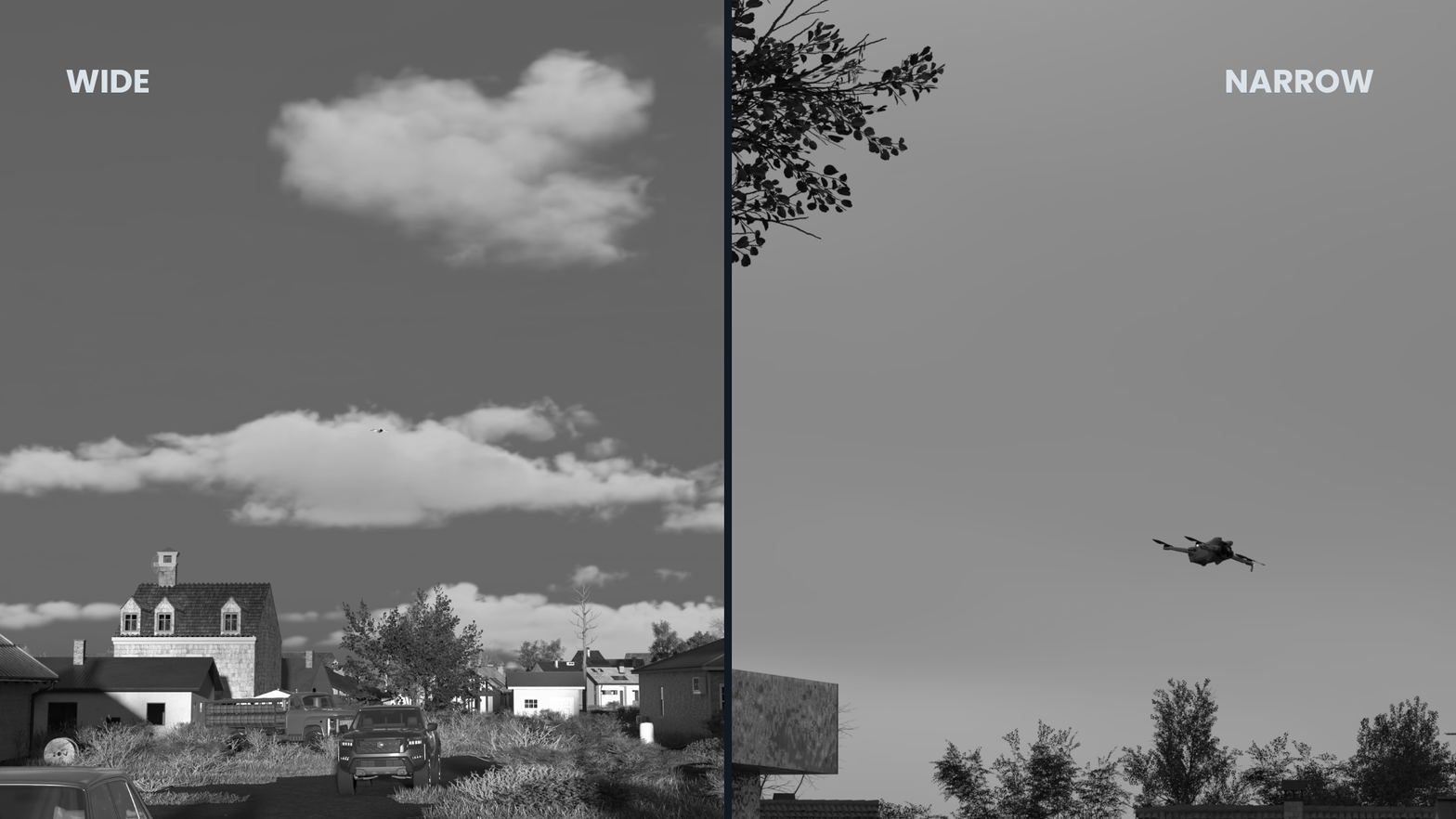
AI Verse built the training data a German counter-drone company could not capture: roughly 17,000 synthetic images, generated to its spec across two camera settings and two drone models, labelled to the pixel. On that data alone, its detector reached 0.989 mAP50 on the narrow camera. The data problem every counter-drone team hits Counter-drone perception […]