
Synthetic vs. Real-Life Image Data for AI Training: 5 Key Questions to Ask
Choosing between synthetic data and real-life data for AI model training is both a strategic and technical decision. Each option has its advantages and challenges, and the right choice depends on multiple factors such as data availability, quality, ethical considerations, complexity, and cost. Let’s explore how to make this decision effectively, navigating five critical questions.
1. Is There Enough Real-Life Data Available?
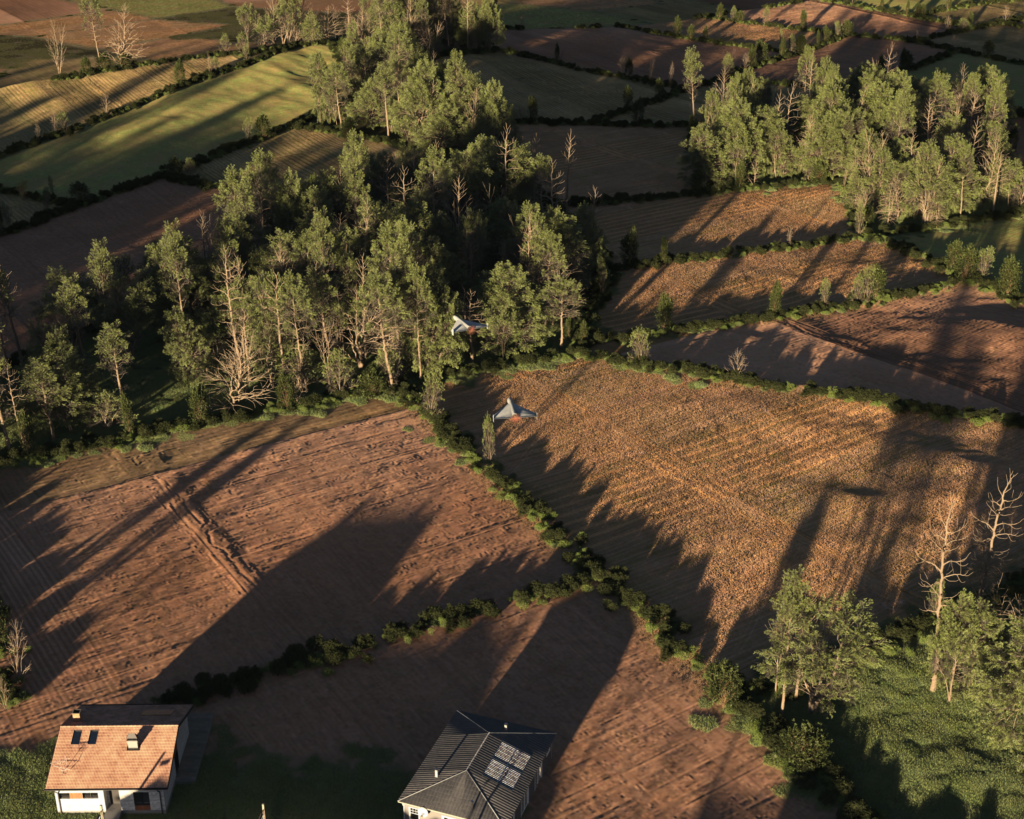
Data availability is a crucial factor in computer vision AI training. If you’re working on tasks like detecting rare wildlife species, identifying threats in security footage, or training defense-related AI models, you may struggle to find sufficient real-world data. Synthetic data offers scalability, allowing you to generate exactly what your AI model needs, reducing dependency on scarce real-world datasets.
2. Does Your AI Model Require High-Fidelity, Variable Data?
For AI systems to perform well in complex environments like autonomous vehicles or smart surveillance, training datasets must be diverse and accurately reflect real-world conditions. However, real-life data often lacks controlled variability, leading to bias or inconsistencies. Synthetic data is highly customizable, enabling precise control over conditions while maintaining diversity, making it a strong alternative.
3. Are There Ethical or Privacy Risks in Using Real-Life Data?
Certain industries, such as healthcare and security, must comply with strict data privacy regulations (e.g., GDPR, HIPAA). Real-world data collection, particularly in surveillance, can pose privacy concerns. Synthetic data provides a compliant alternative, allowing AI models to train on representative datasets without exposing sensitive personal information.
4. Can Synthetic Data Capture the Complexity Your AI Model Requires?
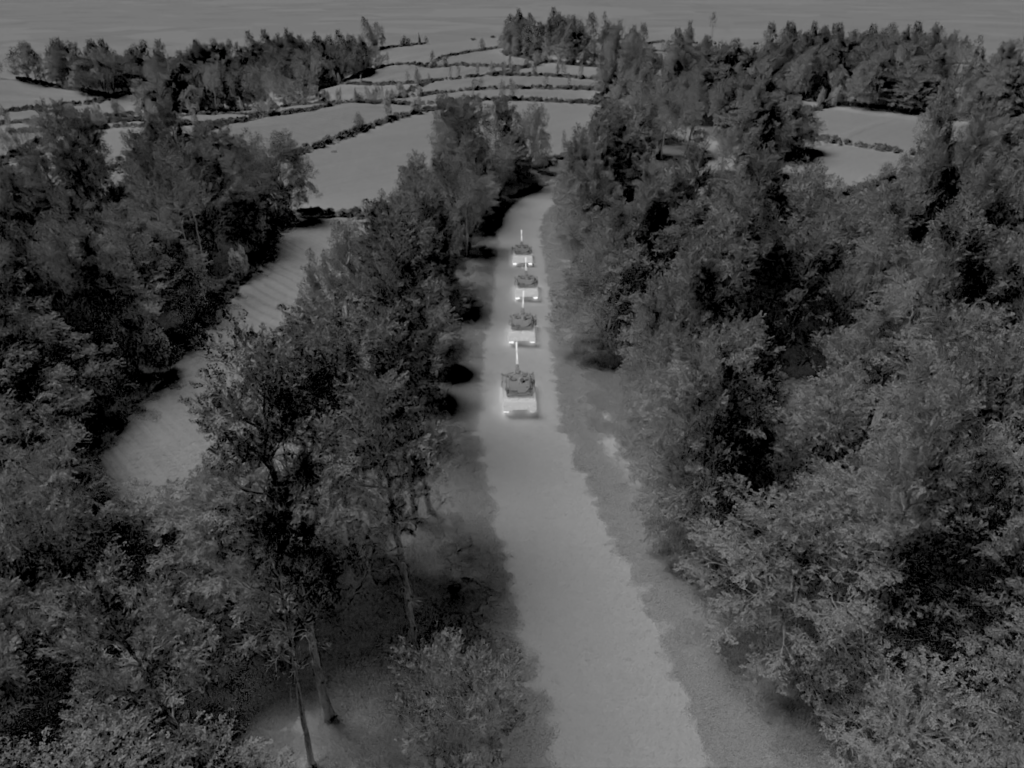
Some AI applications demand datasets that cover extreme edge cases. For instance, tank detection models require diverse battlefield scenarios, while autonomous drones need varied environmental conditions. Synthetic images, especially when generated through procedural engines, can replicate complex patterns and interactions, often surpassing real-world data in specificity and completeness.
5. Is Cost or Time a Limiting Factor?
Collecting and annotating real-world data can be costly and time-consuming. Synthetic data reduces costs by eliminating manual data collection and annotation while accelerating AI training. If you’re working within tight deadlines or budgets, a hybrid data approach—combining synthetic data for rare cases with real-life data for common scenarios—can optimize cost-effectiveness and model accuracy.
Real-World Applications
Many AI-driven industries are adopting synthetic images to maximize training efficiency. For example:
- Aerial Surveillance: Synthetic data improves drone and object detection models.
- Healthcare AI: Privacy-compliant synthetic images enhance medical diagnosis models.
- Security & Defense: Synthetic datasets train AI to detect threats with minimal bias.
By leveraging synthetic images against real-world use cases, organizations can accomplish high results within short time and achieve scalability, accuracy, and compliance of the AI model.
Conclusion
Selecting between synthetic and real-life data is not just a technical choice—it’s a strategic one. The best approach depends on your data availability, quality needs, regulatory requirements, complexity demands, and cost constraints. By carefully considering these five key factors, you can build an optimized AI training strategy that enhances performance, reduces risk, and accelerates innovation.

How to Plan Your Annual Budget to Accommodate Synthetic Data
As the year comes to a close, many organizations are deep into annual budget planning. This is the perfect opportunity to consider how synthetic images can play a role in your operations for the upcoming year. By offering data diversity, annotation accuracy, and scalability, synthetic images address many challenges faced by organizations relying solely on […]

Computer Vision Applications in Military
From boosting surveillance to powering autonomous drones, computer vision is creating a new frontier in defense. Add synthetic image generation to the mix, and you have an innovative combination. Let’s dive into its most impactful applications and how these technologies are reshaping military capabilities. Surveillance and Reconnaissance Effective surveillance forms the backbone of modern defense, […]

Five Trends in Computer Vision for 2025
As we approach 2025, the computer vision landscape is being reshaped by advances in AI, hardware, and interdisciplinary integration unlocking new possibilities for optimizing model performance and addressing challenges once considered impossible. Here are five key trends to watch: 1. Edge AI The demand for real-time decision-making is driving the optimization of computer vision models […]