Synthetic images

for Intelligence, Surveillance, and Reconnaissance (ISR)

Defense Data Problem: Why Real-World Image Collection Fails

Training computer vision models for defense applications requires imagery that is difficult or impossible to collect at scale.

Classified environments cannot be photographed for open dataset creation. Military vehicles, weapons, and hostile drone configurations cannot be placed in training scenarios without operational risk. Border and perimeter environments vary across geography, season, and adversary capability. And the annotation of sensitive imagery, even under NDA, creates provenance risk that acquisition programs cannot accept.

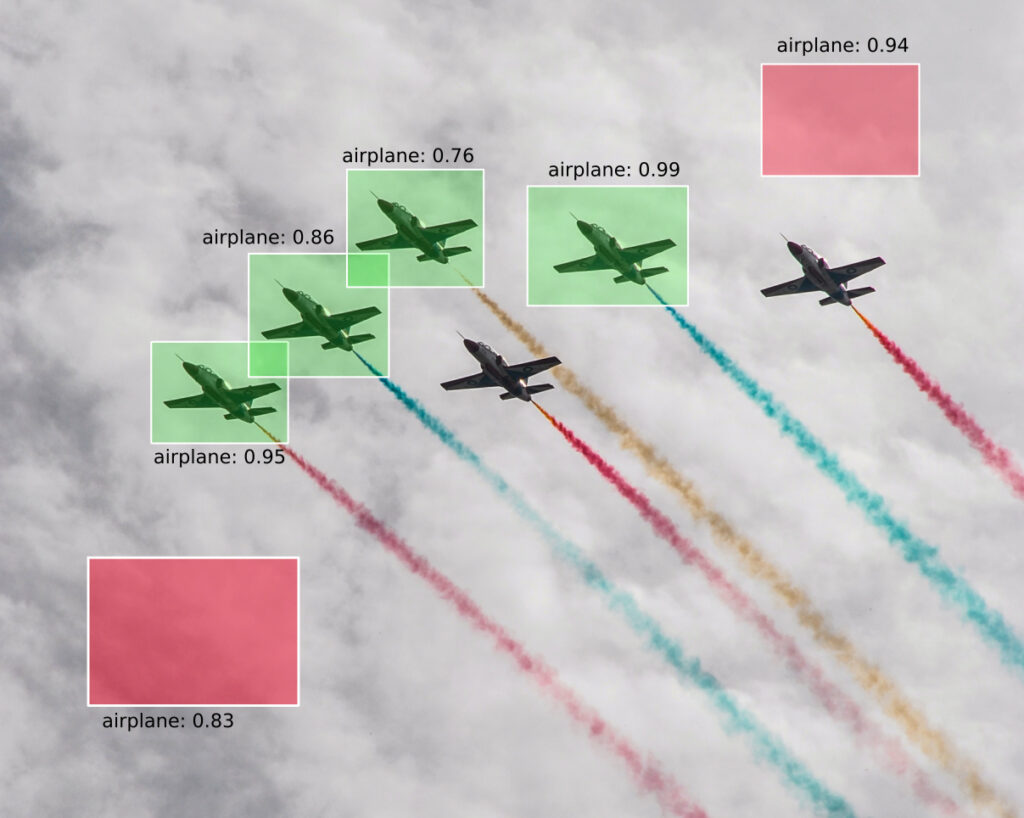
false detections and miss detections of planes
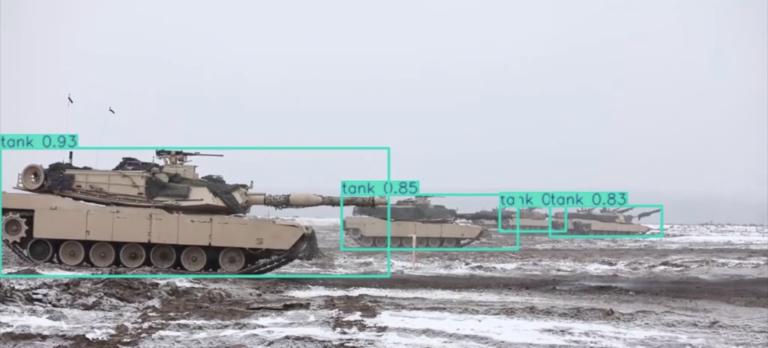
tank detection results of computer vision Yolo L model trained with 100% synthetic images

As a result, defense CV teams are training models on datasets that are too small, too geographically limited, too uniform in lighting and viewpoint, and annotated by contractors who have seen the operational data.

AI Verse eliminates all of these constraints. Scenarios are generated by procedural no-code engine, not captured from the field. Annotations are generated automatically, not drawn by annotators. No classified imagery leaks happens at any stage.

Benefits of  Synthetic Images for Defense AI

User-controlled data generation to Fit AI Training Needs

Configure unlimited datasets to meet your specific AI training needs. Generate diverse training images that with various sensors, lighting conditions, environments and weather condition. Choose objects and actors for your scenes

Lower AI development Cost

Synthetic data generation is more cost-efficient than traditional methods, reducing reliance on rare real-world images that are costly to collect and annotate.

Desreased Dataset Acquisition Time from Weeks to Hours

Synthetic data generation is speeding up development by months! Traditional data collection and annotation methods take months. Synthetic images are generated in hours!

Accurate, pixel-perfect labels for defense AI

Achieve high accuracy of your AI with pixel-perfect labels. Our synthetic images provide accurate 2D and 3D labels available instantly when the images are generated.

Tested and evaluated by Leading Defence companies

Trusted by Defense Primes, organizations operating in Ukraine and tested by NATO, AI Verse synthetic images enhance the accuracy of Defence AI models for various use cases.

Generate unlimited labeled datasets for threat detection, ISR, and autonomous systems.

What Defense Teams Report after using AI Verse training datasets

Improved Accuracy

Enhanced training with diverse synthetic images leads to precise detection and classification of military vehicles.

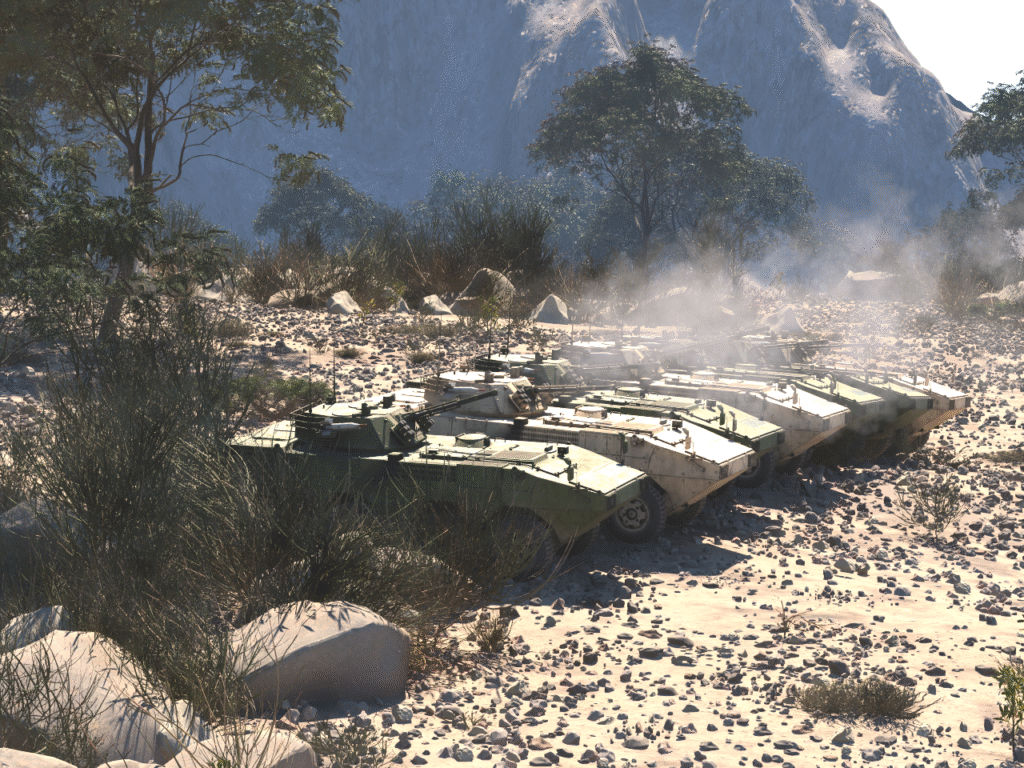
Synthetic image showcasing military tanks convoy in the field

Reduced Costs & Accelerated Development

Synthetic data reduces the time and cost associated with real-world data acquisition, enabling faster model development and innovation.

Synthetic image showcasing military vehicles convoy in the field in the night

High scalability

Rapidly generate extensive datasets and update models seamlessly for large and complex defense projects, ensuring readiness for any operational demand.

Synthetic image showcasing military tanks convoy in the field

Improved Security

Safeguard sensitive information effectively — our use of synthetic data mitigates risks associated with exposing classified vehicle data.

Synthetic image showcasing military tanks convoy in the city view from the drone

AI Verse is trusted by European Defence Primes (for example Thales Trust My Tech), NATO DIANA
and drone manufacturers (like STARK).

KEy defence Applications of synthetic images

Drone Detection (C-UAS)

Autonomous Navigation & Robotics

Locked on target

FAQs

There are 8 pixel-perfect labels included: Classes, Instances, Depth, Normals, 2D/3D Bounding Boxes, 2D/3D Keypoints, Skeletons, and Color.

Users select the desired parameters for the environment, scenes, objects, activities, lighting, and more. Based on these criteria, our engine can generate an unlimited number of diverse, varied, and labeled images ready for AI model training.

Yes, our automated system ensures that each generated image contains 8 pixel-perfect labels, reducing the risk of inaccuracies and guaranteeing the highest data quality.

Our proprietary procedural technology generates images based on human input. Users select various criteria for the image from a menu in a step-by-step process, rather than typing a prompt into a GenAI tool. This approach minimizes mistakes and ensures the highest possible realism in our images.

It takes 4s to generate one labelled image on 1 GPU. Generation can be spread across several GPUs (max 10).

AI Verse focuses specifically on high‑fidelity, physics‑aware synthetic imagery for defense instead of generic text‑to‑image generation. Our procedural engine gives user full control over scene parameters, sensor characteristics, and environments, giving teams repeatable, testable datasets.

Latest News & Events about AI-Verse

A Practical Guide to Labels Behind Computer Vision Models

In defense and security applications, where precision, reliability, and situational awareness are critical, the performance of computer vision models depends in 80% on the inputted labeled data. Annotation is the process of adding structured information to raw image or video data so that AI systems can learn to interpret the visual world. It enables models […]

How to Build Accurate Computer Vision Models

Computer vision is the field of AI that enables machines to interpret and make decisions based on visual input. Tasks range from classifying images and detecting objects to understanding spatial context and tracking motion over time. But the success of a computer vision model hinges on its ability to generalize across varied, real-world scenarios. Model’s […]

How to Convince Your Team to Invest in Synthetic Image Datasets

Transitioning from real-world data to synthetic datasets isn’t always easy, especially for teams that have relied on conventional methods for years. The most common objections include: The Case for Synthetic Data 1. Faster, Cost-Effective Data Generation Real-world data collection is slow and costly, often requiring extensive fieldwork and manual annotation. Synthetic datasets, on the other […]

1 3 4 5 6 7 12

Generate Fully Labelled Synthetic Images
in Hours, Not Months!